Believe it or not, there are still some secrets in Venice, and these are my top Venice secrets for 2026. Nowadays almost every ‘hidden gem’ has been discovered and shared widely. Very little is truly unknown – and who would wish that on a business or attraction that needs to earn money to survive? But these are all sights or activities where I have found myself alone or almost alone and where the ‘secret’ is clearly in the hands of very few people indeed.
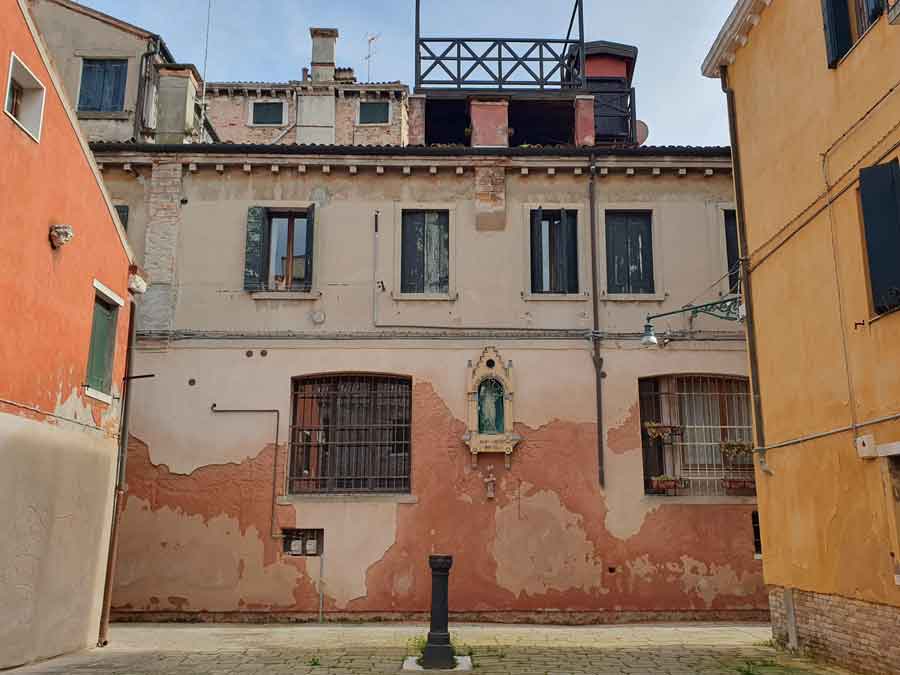
Even after twenty years exploring Venice, some of them spent living here, I still find sights that are new to me or things that surprise me: a hidden courtyard where I’ve never ventured, a piece of outsider art displayed in a garden, a small stone relief I’ve never noticed. And there are new attractions: a restored garden or a palazzo newly opened to the public. In my detailed insider Venice guidebook I share a lot of my Venetian knowledge, from recommended itineraries for different-length stays to cocktail bars. It’s the perfect companion for a trip to Venice. Here, though, are some of my current favourite things and best-kept secrets.
1. A hidden restaurant on an island with a past: Roba da Matti
I’ve eaten at this ‘secret’ restaurant a few times and have never found more than two other tables occupied (if that). Roba da Matti is an excellent and welcoming place to eat with a smart contemporary feel. The delicious food brings a lightly modern approach to traditional regional cuisine, and is made with seasonal local produce. And while the food and atmosphere is special, the prices are very reasonable indeed.
So why isn’t Roba da Matti better known? It’s partly because the restaurant is fairly new, although run by a well-established local restaurant and catering group. But mostly it’s because Roba da Matti is off the tourist trail, the workers’ trail and almost any trail. It’s on a small Venetian island across the water from St Mark’s, San Servolo, and most visitors and locals don’t have a clue that it exists.
San Servolo is a fascinating island, fairly typical of the small islands in Venice’s lagoon. Once a religious institution, it was later the setting for a psychiatric hospital. Nowadays as well as a college and conference facilities, there is a small museum dedicated to that ‘lunatic asylum’ era: the Museo del Manicomio, which I’d strongly recommend visiting for Venetophiles looking for insight into a different aspect of Venetian history. It was after a visit to the museum that, exploring the green spaces of the island, I first followed signs to a restaurant and ate my first lunch at Roba da Matti (the name means ‘The stuff of fools’). I’ve been back since just to walk through the green spaces and eat at the restaurant.
If you’re visiting Venice, this restaurant’s a great place to take some time out from sightseeing. You’ll need to plan around the timetable of the ferry (vaporetto) to the island; I’d recommend you check this in advance to avoid long waits. The 20 service departs from the San Zaccaria “B” jetty and only takes a few minutes to reach San Servolo. It continues to San Lazzaro degli Armeni, the island which still houses an Armenian monastery and can be visited on pre-booked guided tours. So you can combine both islands in an island-hopping day out; just check the boat timetables and be sure to book ahead for San Lazzaro degli Armeni. (ACTV timetables)
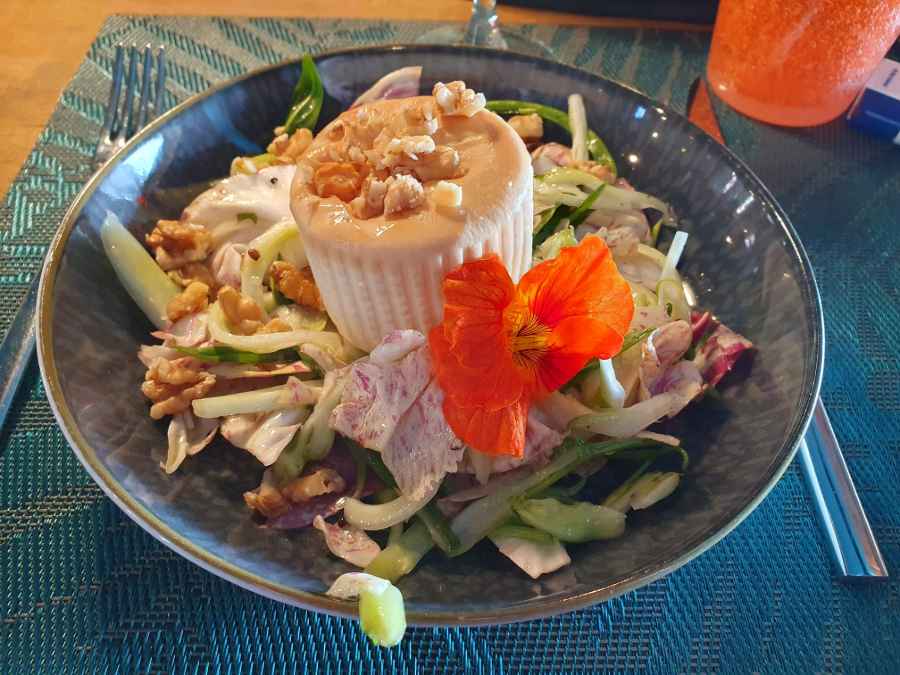
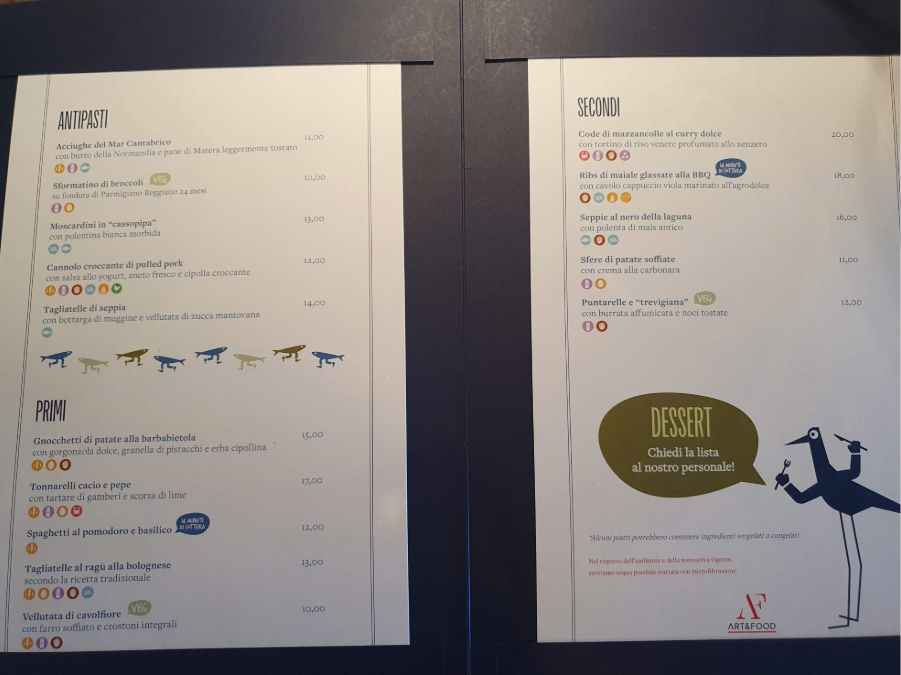
I most recently dined at Roba da Matti in March 2026. There were just five other diners in the restaurant at lunchtime. I ate four marvellous courses with a glass of local Ribolla Gialla wine. There have always been good vegetarian options on the menu when I’ve visited, and I chose from these. A broccoli flan was followed by pasta with gorgonzola, pistachios and chives. Unusually for me, I was tempted by a secondo, a smoked burrata (delicious) with puntarelle (translates as something like chicory shoots) and Treviso radicchio. Then I was tempted into a dessert from a tempting and very fairly-priced menu. It’s been ages since I’ve been in Campania and enjoyed delizia al limone, I opted for that rich but light lemon option. “It’s what they ate at the Bezos wedding” observed the friendly waiter. The whole four-course meal with wine cost €50.
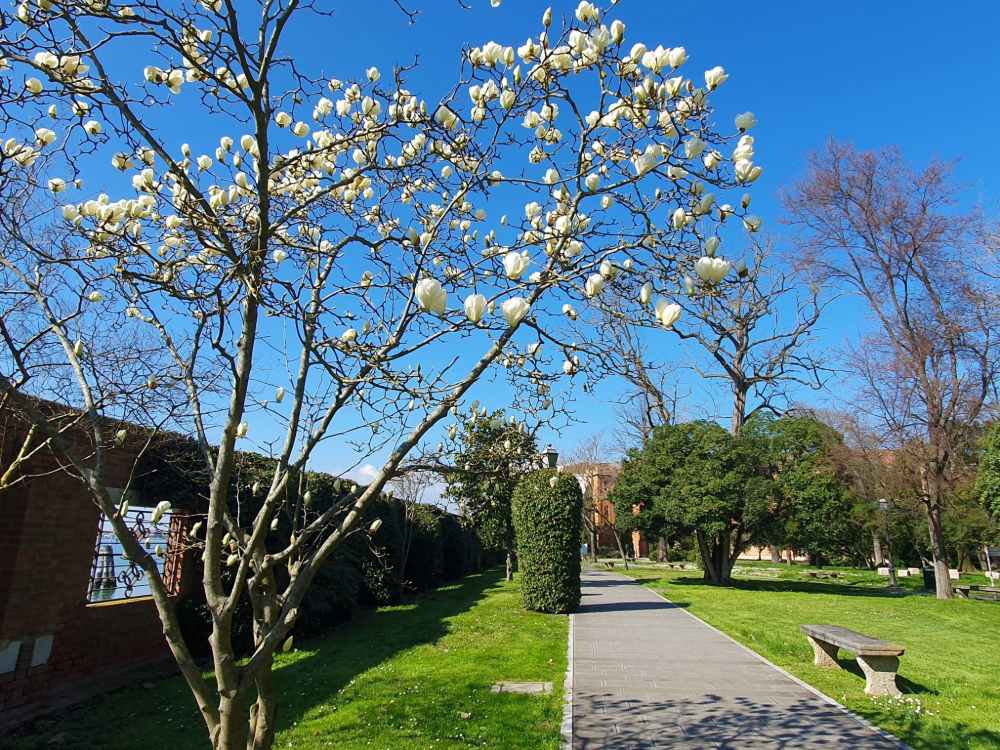
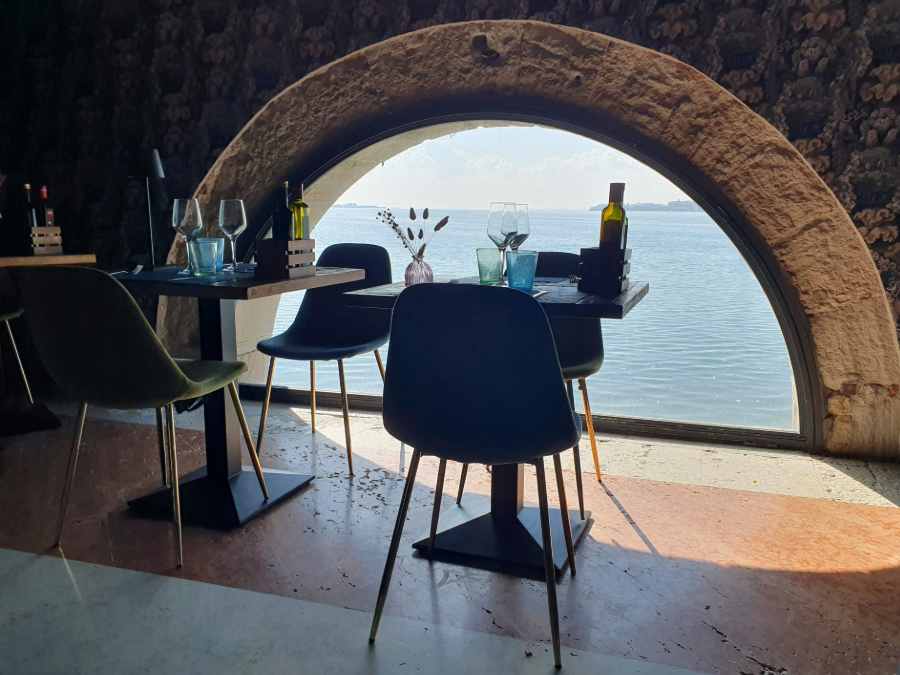
To reach Roba da Matti, catch the 20 vaporetto then follow signs from the San Servolo boat jetty through the brick-walled garden. Dotted with sculptures and planted with trees (there was a lovely magnolia in flower in March), this makes a delightful approach to the restaurant. If you book ahead, you might be lucky enough to get a table next to the arched window with a view directly out onto the lagoon waters (the women’s loos also have big lagoon views!). I’ve never dined here in the evening but imagine it would be very atmospheric, if not slightly spooky thinking about the island’s long varied history. If you visit in daytime, allow time to wander around the green spaces. https://www.artandfoodgroup.it/robedamatti
2. Free classical music in a historic (and empty) church
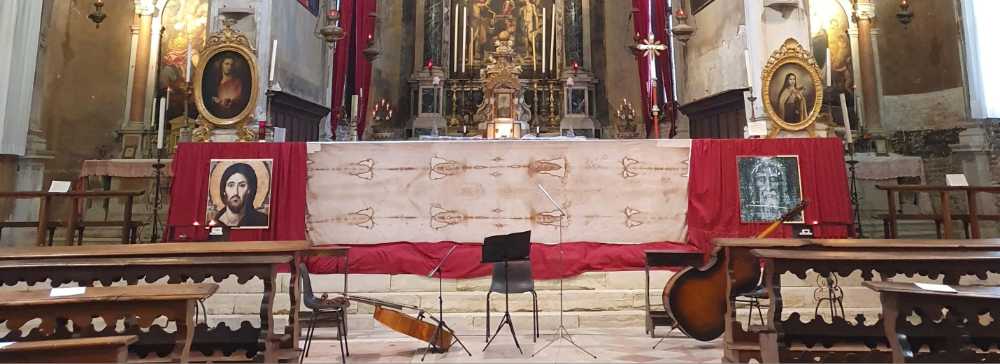
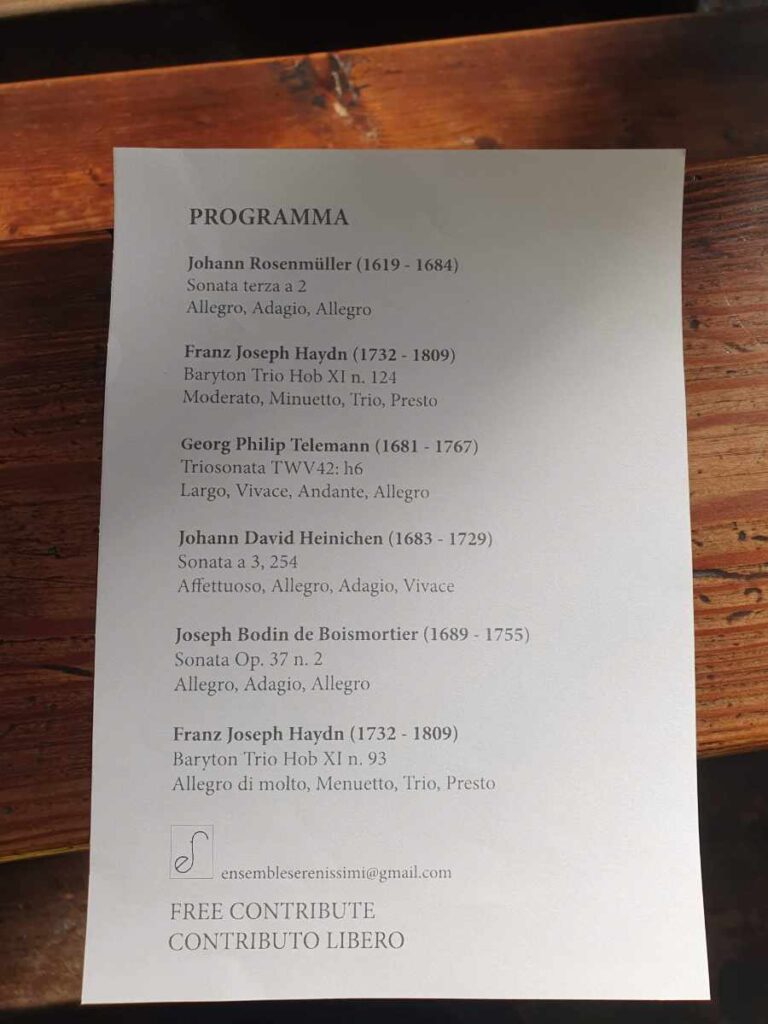
I only found out about these little Baroque and classical music concerts when I walked past the out-of-the-way church of Ognissanti (All Saints) in Venice and noticed a small poster on the door. On some Monday or Tuesday mornings the Ensemble Serenissimi trio set up their instruments in front of the altar and perform a concert of trio sonatas lasting about an hour. Admission is free, though donations are welcomed (there’s a donations box for cash; do give generously if you’ve enjoyed the music).
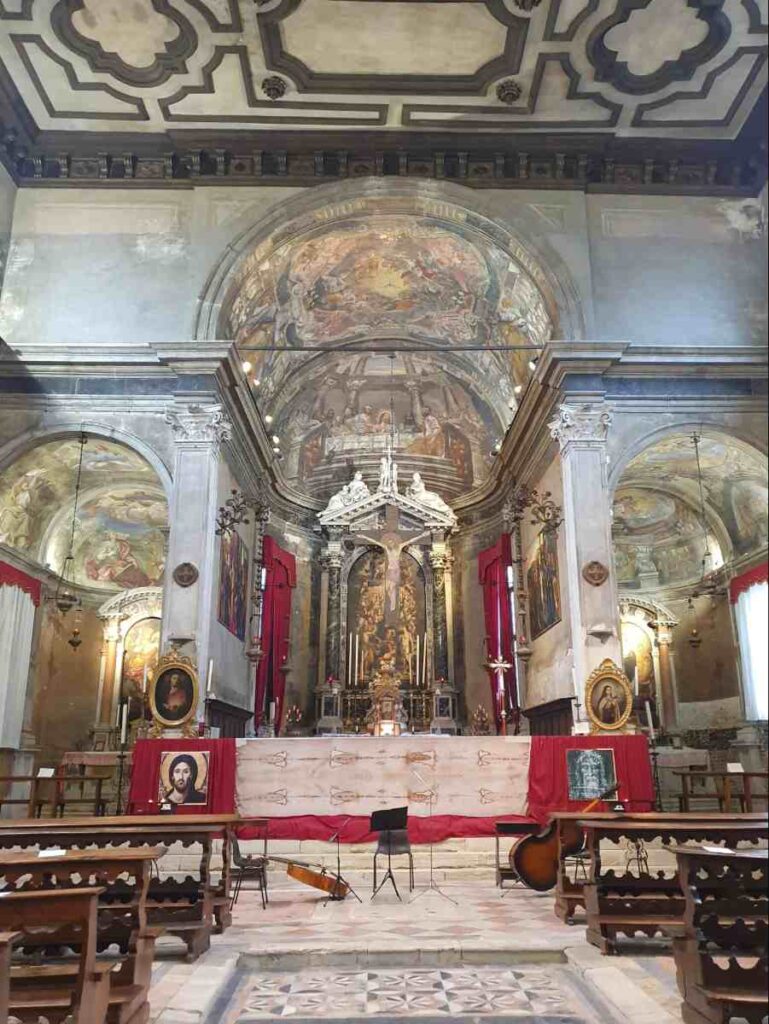
When I’ve attended, there have only been one or two other people sitting waiting in the church pews before the music begins. Generally the audience has grown to six or seven by the end, as passers-by hear the music and enter. Once the concert is over, do take a look around the church, at its historic nuns’ gallery, its art, including a St Michael altarpiece attributed to Andrea Michieli (Andrea Vincentino), and the remarkable wooden fittings in the sacristy which were formerly in the island church of San Clemente.
I’ve enjoyed musical performances at Venice’s opera house, La Fenice, and at other theatres in Venice, as well as the Vivaldi concerts for tourists. All have something special to offer and very different atmospheres. These little concerts, with their informality and lack of publicity, are a charming alternative to those sell-out commercial performances. It feels as though these musicians are playing for pleasure and the love of music.
Hearing the melodic sound of strings rising through sunbeams in these handsome historic surroundings is really quite a magical experience. Delivery men shout outside from their boats, dogs bark outside the door; the combination of historic music, the church surroundings and the general ambience is truly Venetian.
Combine taking in a morning concert with exploring the romantic, arty Dorsoduro district: the walk ‘A Dorsoduro Ramble’ in my guidebook will take you into the heart of the sestiere. Dorsoduro is also a great district to stay in.
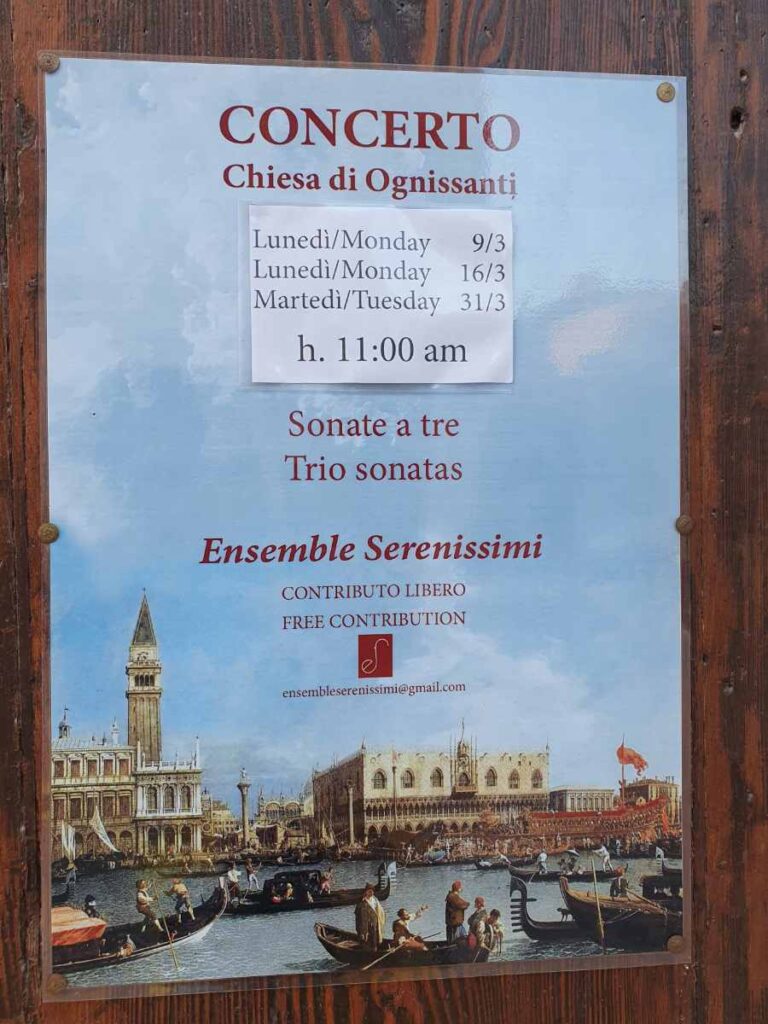
The next concert is due to take place on 31st March 2026 at 11am. I’ve not found the concerts advertised anywhere other than on the Ognissanti church door, so to find out about any future events in advance, you may need to stroll in this direction or email the address on the programme I’ve photographed.
3. Monastery gardens: from a spiritual journey to a lagoonside glass of wine
Venice has some fab hidden-away gardens including public parks, which I list in my guidebook (please buy it!). These two gardens, though, offer something a bit different: they are both once-private monastery gardens which can now be visited for an admission fee. There are still friars/monks in both monasteries, though they are from two different religious orders and have very different gardens.
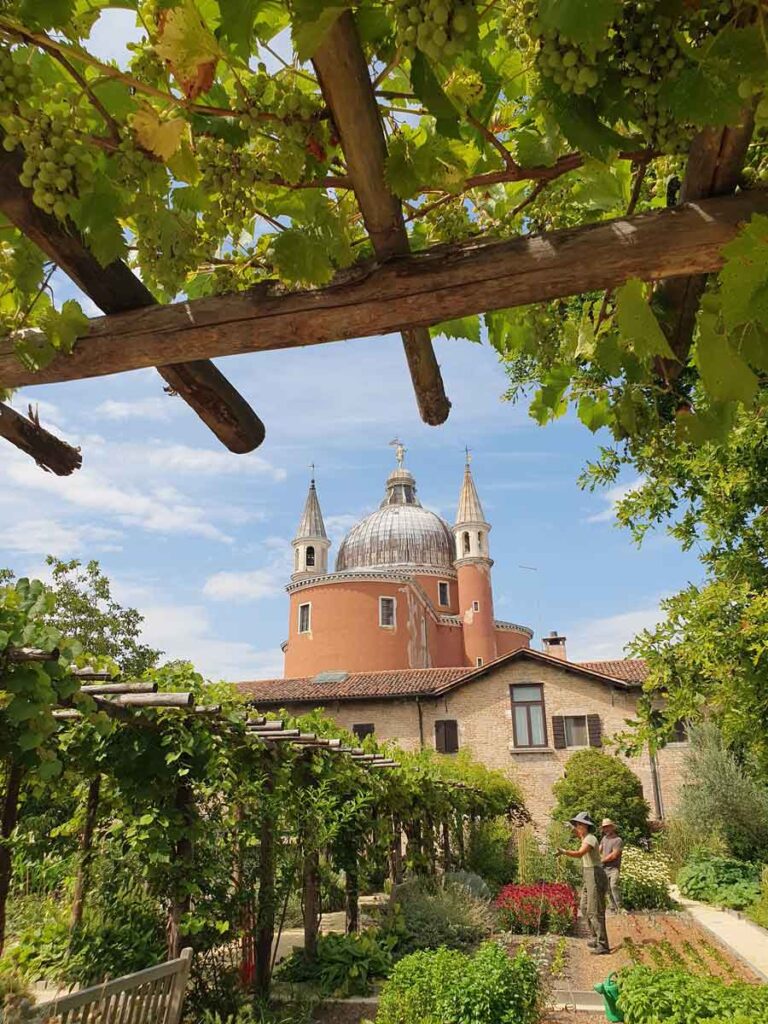
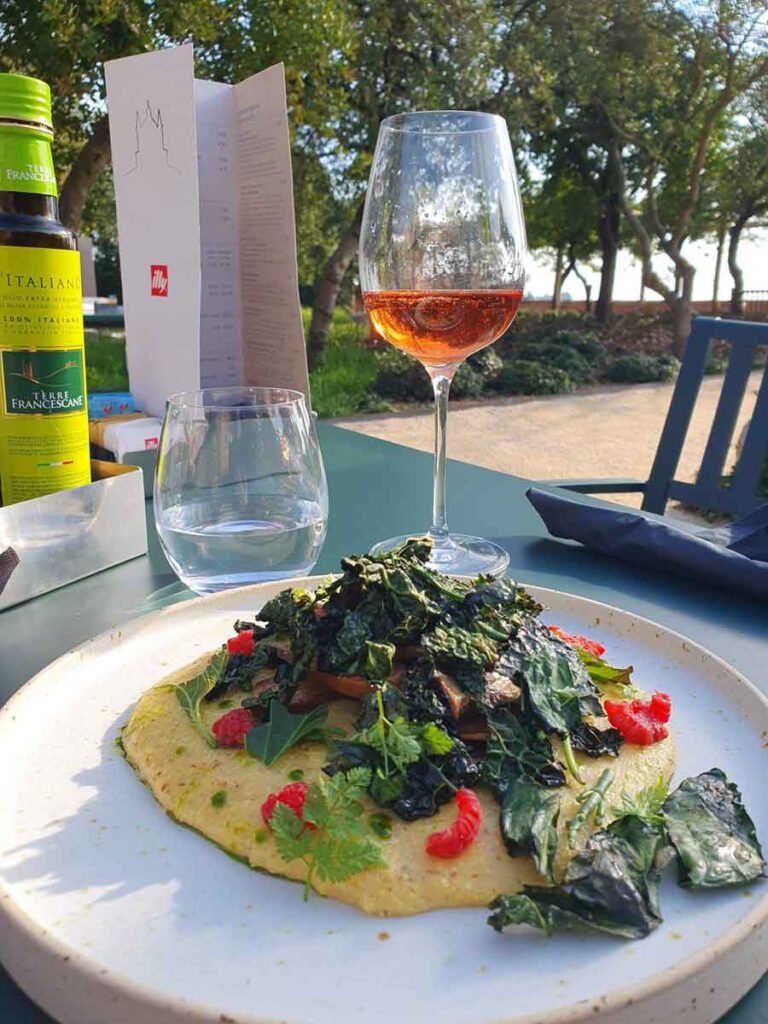
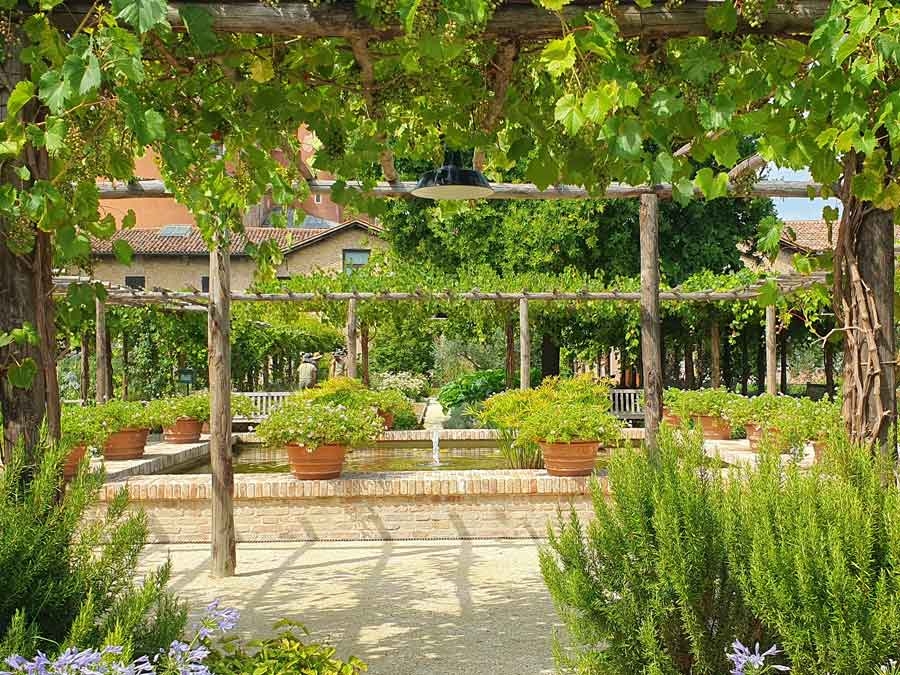
My favourite for an all-round experience is the garden of the Redentore (‘Redeemer’) church and monastery on the island of the Giudecca. Passing through a silent cloister you come to the extensive well-cared-for vegetable gardens between the church and the southern lagoon shore. There’s a pool and fountain, a huge range of vegetables, flowers and plants to admire, and a wonderful, peaceful atmosphere that makes this a true haven in the city. Best of all is the small garden at the lagoon edge, where you can look out at passing boats and small islands, read a book on a bench in the sun, or eat and drink at the little café-bar, which serves light lunches incorporating fresh produce from the garden. I love it.
Admission to the garden of the Redentore costs €12; there are various membership levels which are worth considering if you live in Venice or are a frequent visitor. I had an annual membership and have loved popping in to see the garden in all seasons. Check the opening days before visiting (currently Thursday, Friday and Saturday, extending to Wednesdays in May, June, September and October). https://www.venicegardensfoundation.org/en/redeemer
You can’t lose yourself in the Mystic Garden of the Carmelite friars (Giardino Mistico degli Scalzi) in the same way as you can at the Redentore. This garden is plainer, more rigorously laid-out with a religious message, and harder to visit. There are tours through spring and summer; longer tours for visitors booking for small groups during the week and shorter tours in Italian (around 40 mins) for individual visitors who turn up on Saturday mornings at set times, weather permitting. The latter times are listed on the official website/social media and in reply to enquiry emails, but aren’t guaranteed. Tours cost €7 per person, cash only. https://www.giardinomistico.it/blog/
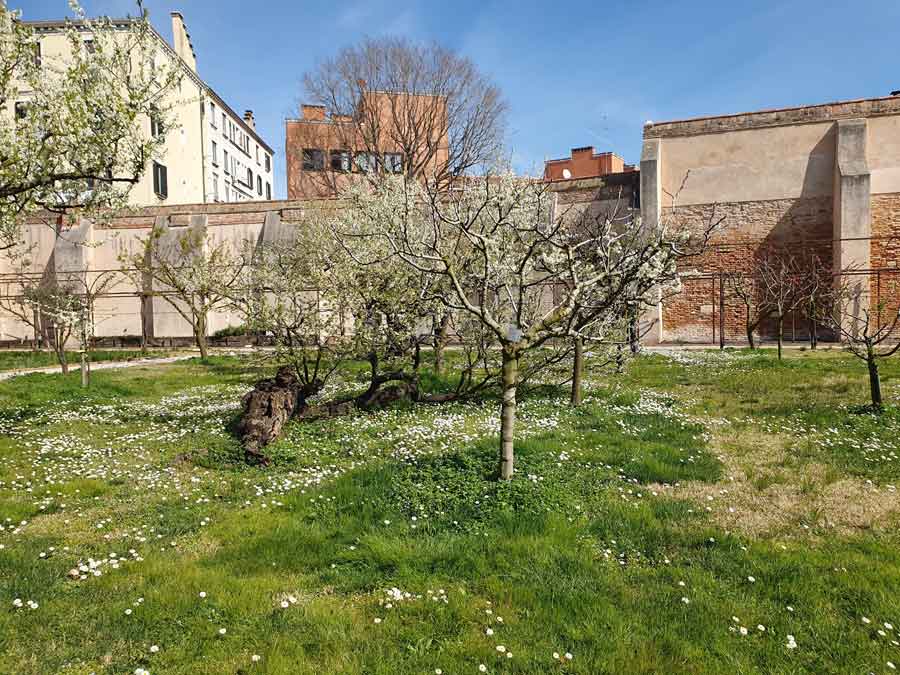
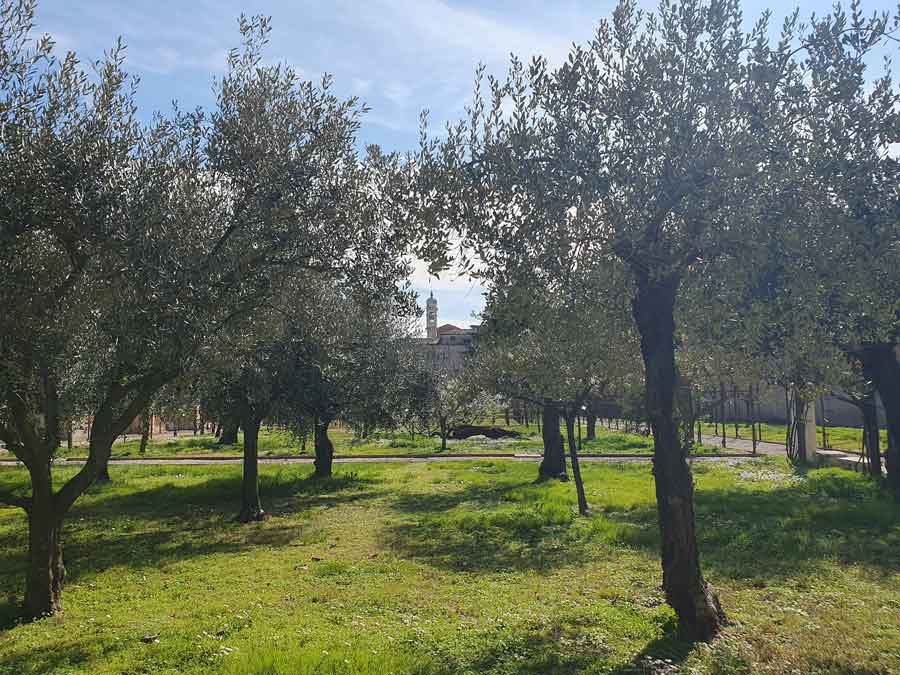
This historic vegetable garden, alongside the railway station in Venice, was redesigned in this century to bring to life a spiritual journey based on the writings of St Theresa of Ávila. The long space is divided into seven sections which, a guide explains, represent stages on the journey from dark woods and obscurity (an olive grove by the water gate) towards union with God (arriving at the church). There are herbs (representing purification of the soul), orchard trees (in blossom when I visited in March), and vegetables along the way. There are also rows of vines which include many varieties of grape historically grown around the lagoon islands and shores.
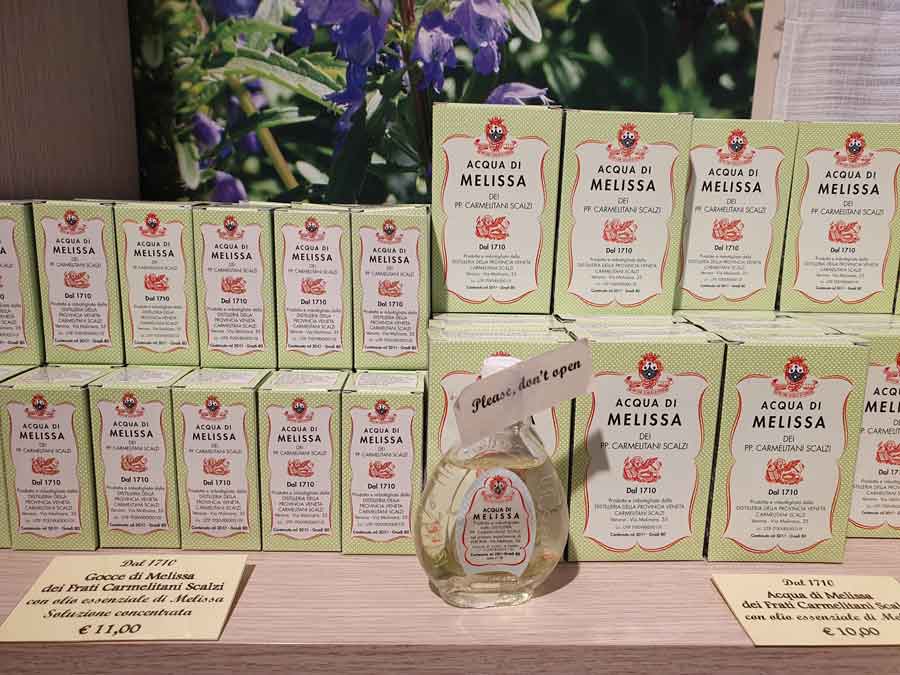
The church here, the Scalzi, is also interesting, and there is a shop attached where you can buy wine from the gardens’ vineyard and herbal remedies made by the Carmelites including their Acqua di Melissa (‘Carmelite Water’), a lemon-balm multi-purpose elixir.
Visiting just before the official start of spring, with vines and many trees still leafless, this wasn’t the most verdant or relaxing garden to visit in March but it is a real curiosity for those who know Venice or are intrigued by unusual gardens. I like the little shop as well; they have lots of scented soaps as well as the medicinal products and religious souvenirs.
4. Palazzetto Bru Zane: a hidden frescoed gem
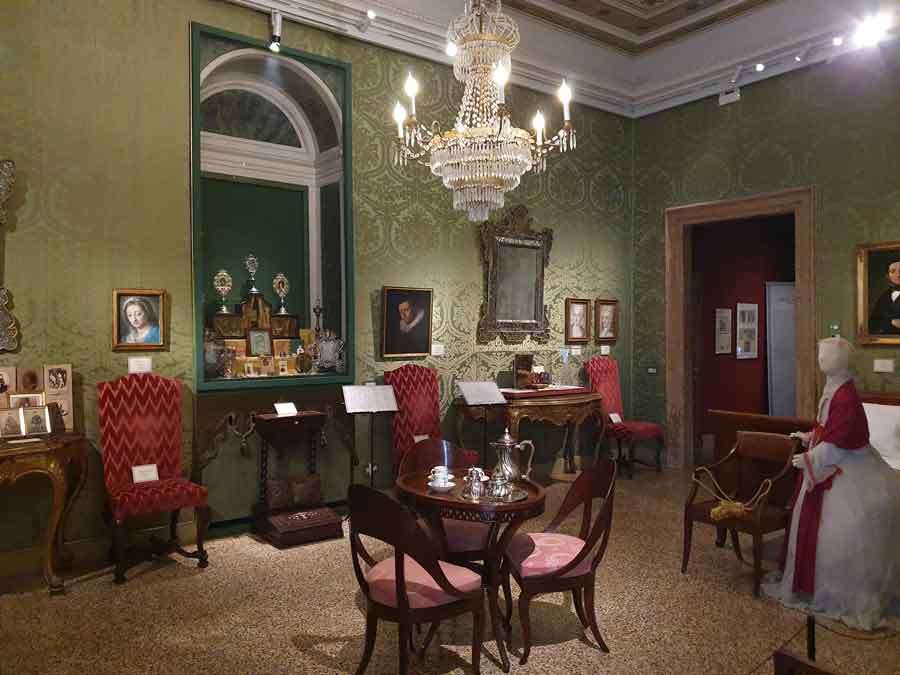
Palazzetto Bru Zane is a small, under-the-radar historic curiosity which is open to the public for free tours. This little building was once the casino of a huge and grand palazzo nearby. Often situated in a large garden, a casino was originally a kind of pleasure pavilion where patrician Venetians would entertain their friends with music, parties and card games. When public gambling was outlawed in Venice, these private buildings were the place to go to gamble away your inherited wealth; and the word casino eventually acquired the meaning it has now.
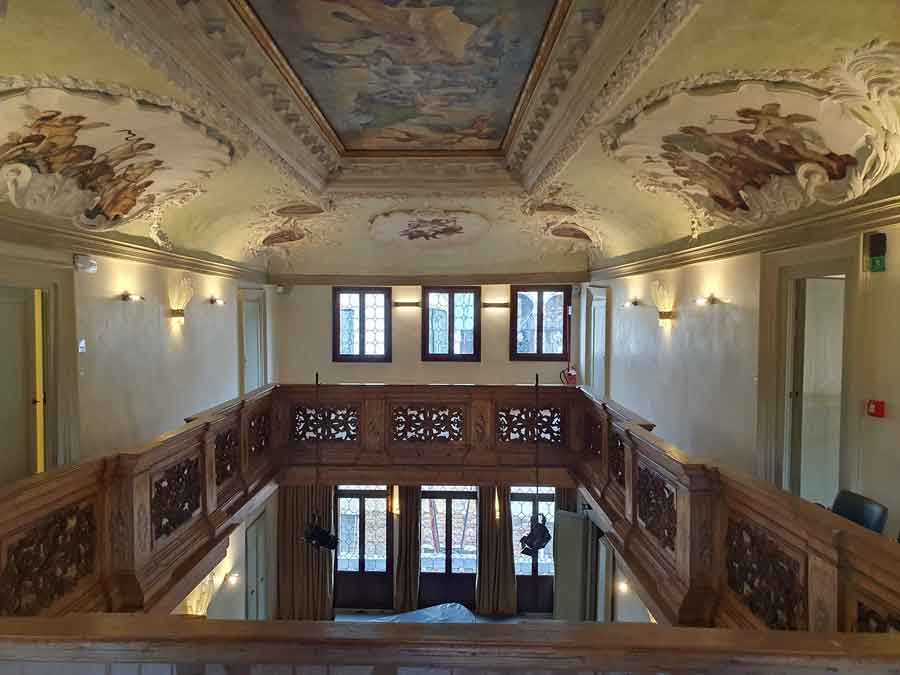
Originally constructed at the end of the 17th century, Palazzetto Bru Zane was lavishly frescoed during its years as a casino, with frescoes attributed to Sebastiano Ricci. As the formal French garden alongside was eaten up by new buildings and the casino itself turned into dwellings, some of the grandeur faded away or was painted over awaiting rediscovery.
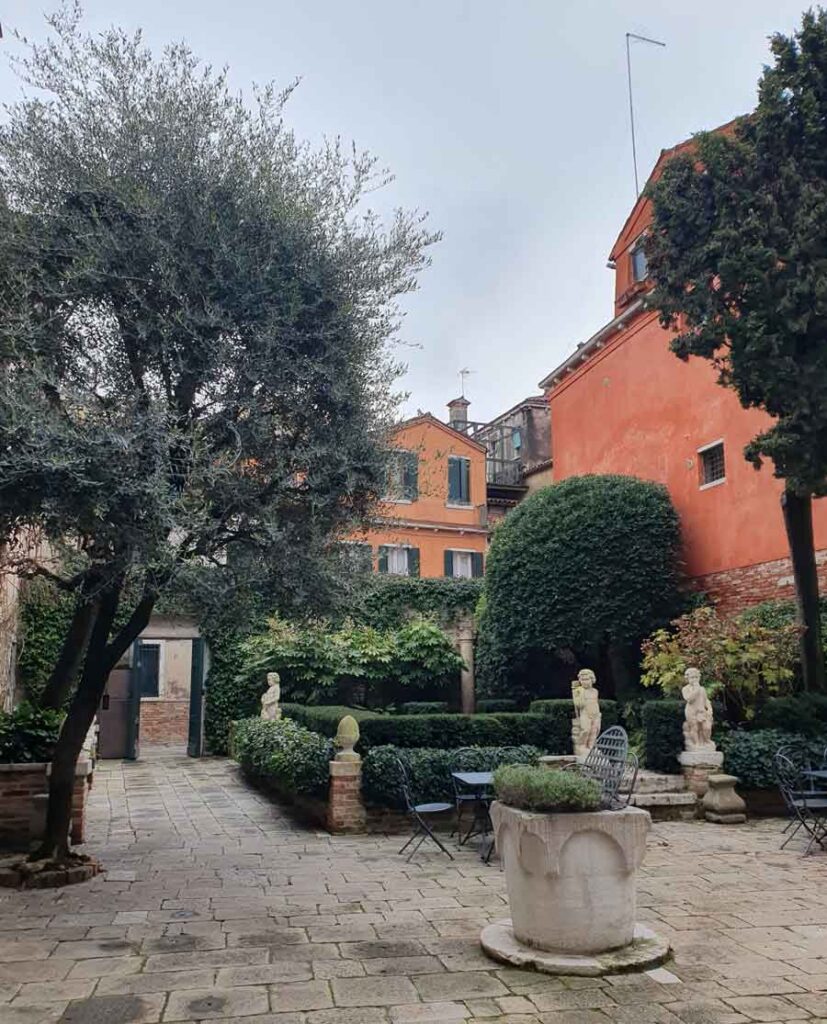
After time as a Habsburg residence (note the double-headed eagle by the gate), the building now belongs to a French foundation, the Fondation Bru. The little palazzo is a centre dedicated to French Romantic music, and hosts concerts and lectures. Generously, the Foundation also runs free guided tours of the building in English, Italian and French. These are quite short, as the building isn’t large, but are a fascinating window into this aspect of Venice’s pleasure-filled aristocratic past as well as the changes in the urban landscape over time. Tours take place on Thursday afternoons: book ahead. https://bru-zane.com/en/scopri/visite-guidate/
Other less-visited historic palace and casino treasures in Venice which aren’t widely publicised include the marvellous little Casino Venier, free to visit (booking necessary, see my guidebook for more details and the ‘Secrets of San Marco’ walk), where you can discover a concealed spy-hole in the floor, and Palazzo Vendramin Grimani, a Grand Canal palace with historical exhibits open during exhibitions.
5. The secret of how to escape the crowds in Venice
Escaping the crowds is my Venetian superpower, and the last of my top 5 secrets.
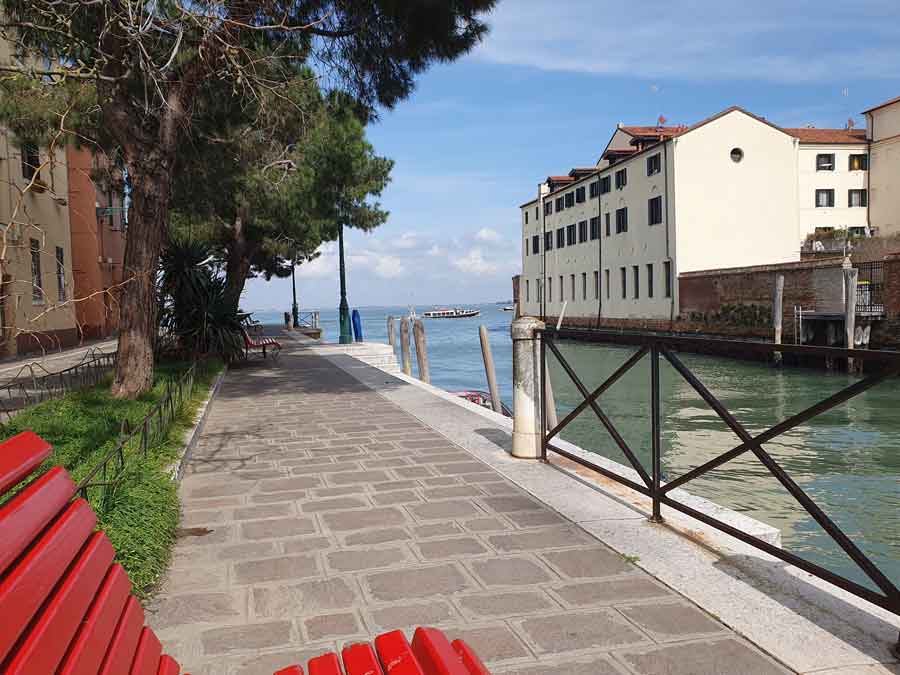
With big groups of daytrippers streaming into Venice from the railway and bus station on a busy Saturday this month, I took to the northern shores of Cannaregio and enjoyed a long ramble in the sunshine, where I passed a handful of locals and hardly anyone else.
There are many places in Venice you can walk to avoid the crowds if you’re in the know. That Saturday I’d been visiting the Mystic Garden of the Carmelites by the station (described above) so I was in a very busy place at a very busy time. There were huge crowds of mainlanders visiting in cheering bar-crawling groups, as well as tourists. I ate a quick lunch while considering my strategy to find peace and quiet.
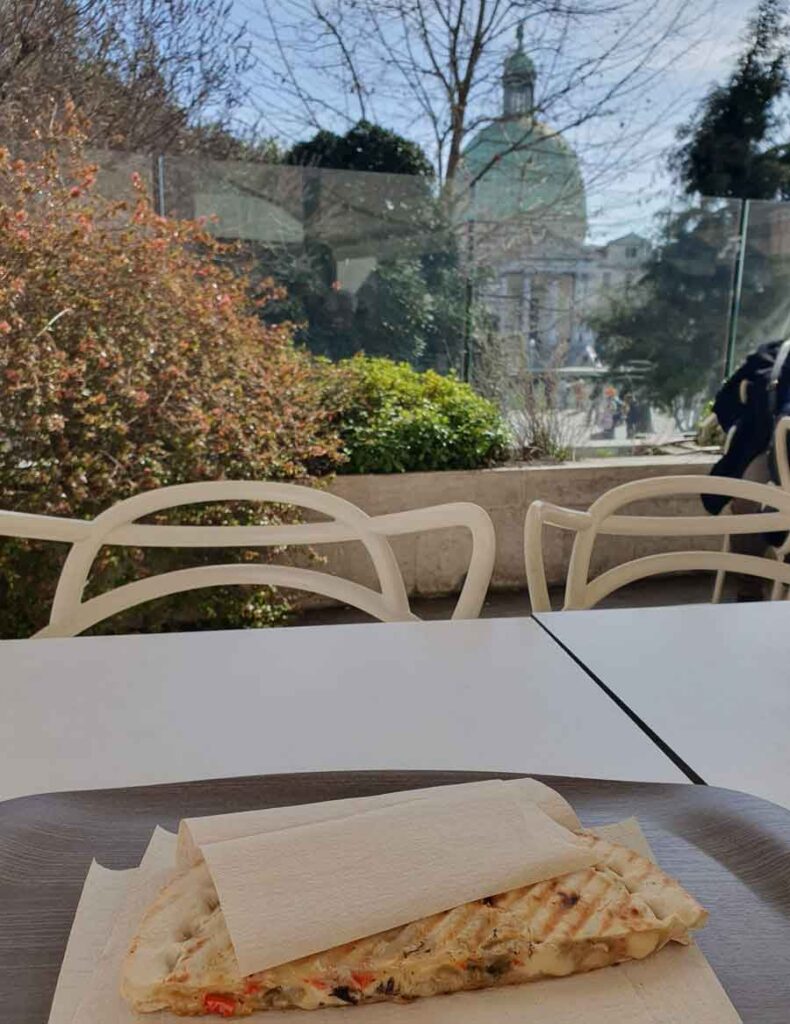
An extra Venice tip: if you want decent affordable food and a sit-down, the station is actually a good place to find these. By Platform 1 is a branch of pizzeria Rossopomodoro and there are various other shops and food counters, some grouped in a ‘food hall’ area which even has some pleasant outdoor tables for customers – see my photo below.
I started my escape from the throngs along a secretive route that begins alongside Platform 1 of the station and can be accessed from the platform or from the front of the station by the Mystic Garden/Scalzi shop side entrance. This footpath heads along a canal with rather weird vibes, with a mysterious semi-abandoned garden over the water that has intrigued me since I first saw it. Looking back there is also a glimpse of the water gates of the Carmelite’s Mystic Garden. Last year I watched a kingfisher along this canal.
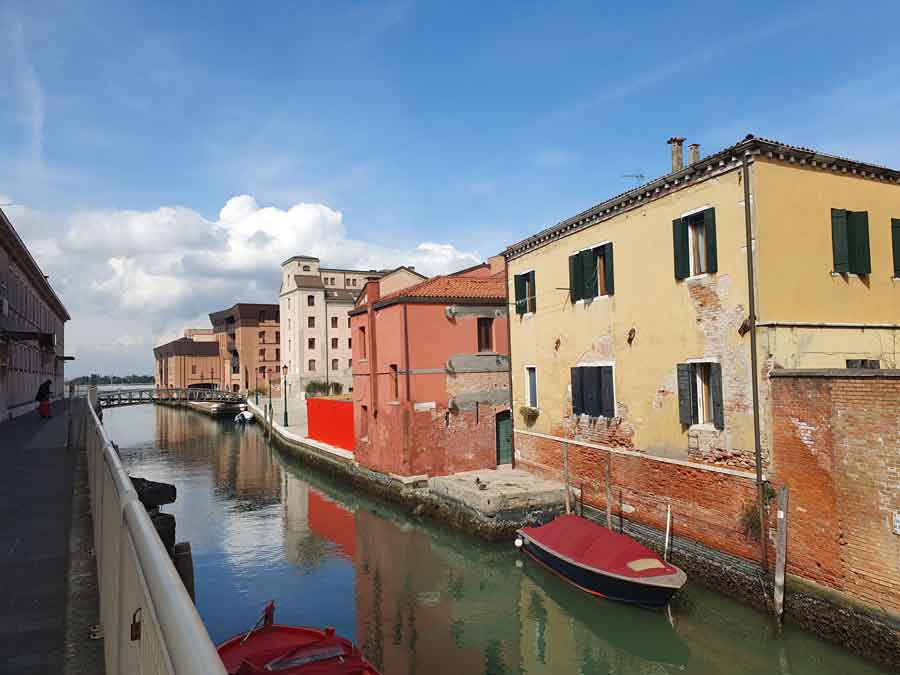
Where the canal emerges into the lagoon you cross a bridge named for Venetian terrorism victim Valeria Solesin, murdered at the Bataclan in Paris. Keeping to the lagoon-shore waterside, you walk past a complex of university buildings that was once Venice’s slaughterhouse – animals were brought from the mainland. You can still see animal head carvings over the doorways.
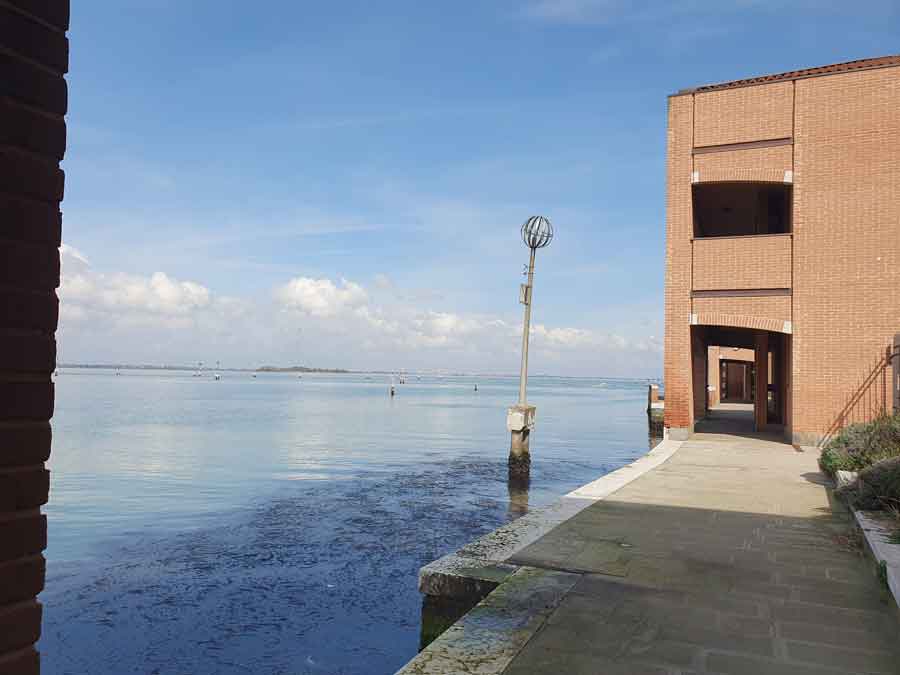
After crossing the wide Cannaregio canal near the church of San Giobbe (worth visiting) you can join the circular walk ‘Cannaregio Three Canals’ from my Venice guidebook. Or just explore this network of lanes and canals, where my highlights include the churches of Sant’Alvise and the Madonna dell’Orto and the public park Villa Groggia, once an ornamental private garden.
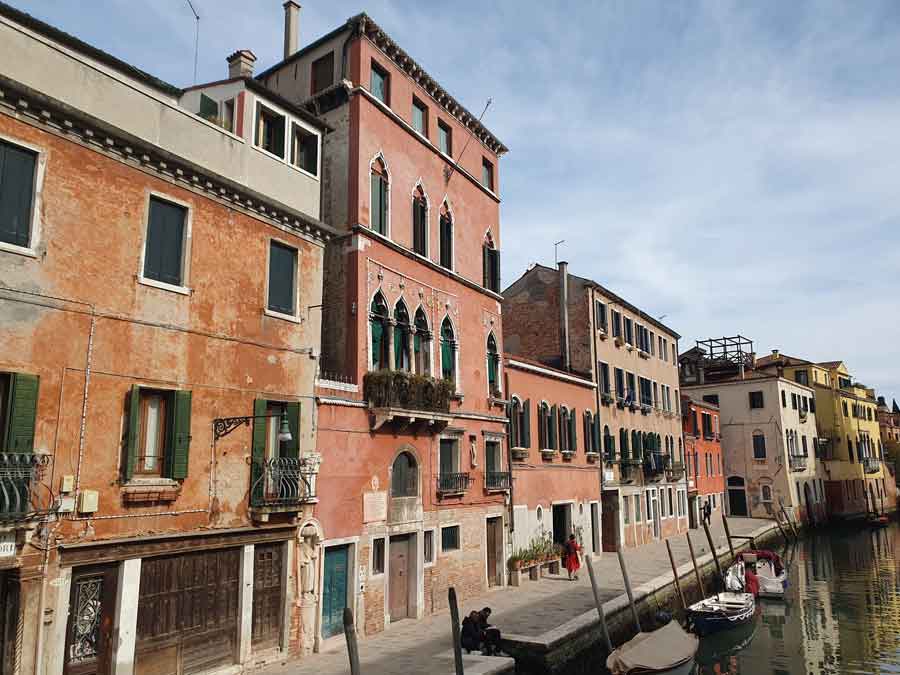
I enjoy this area especially in winter and early spring, as it’s a great place to feel the warming sun on your face as well as wandering freely without the obstacles of crowds. I lived nearby for a few months and enjoyed exploring these canals on my daily rambles. But you can dodge the crowds and discover hidden treasures in every district of Venice – some may be harder than others, but it is possible, I promise.
Discover Venice on foot on and off the beaten track
My Venice guidebook is full of detailed information and guides to museums, churches, islands and other sights, as well as contextual chapters to explain Venetian art, history, quirks and more. But one of the features I’m most proud of is the chapter of walks.
I’ve written walk directions for exploring each of Venice’s six districts, as well as an introductory ‘Taste of Venice’ walk. These include my favourite walking routes, hidden gems, and plenty of secrets as well as the most important sights. They all take you into less-visited areas and offer an interest-filled excursion discovering the real Venice.

Get my guidebook & discover Venice inside out with detailed walks and all the best places, art and food to enjoy
Found inspiration? Looking for more?
Buying my Venice guidebook will give you access to a wealth of travel information, context and detailed descriptions as well as supporting my work. The insider secrets, tips and restaurant recommendations will almost certainly save you a lot more money than the guide costs to buy!
The Venice section of this website is also packed with ideas, including days out from Venice and advice on where to stay: from choosing a district, to suggested hotels and B&Bs – including hotels on the Grand Canal. Booking accommodation by using links on this website will earn a small commission which will help me to keep the website online and be very much appreciated.
Alternative, if you’ve found my work helpful or interesting, please consider buying me a coffee – these tips will go towards supporting the website and future research and writing. Thank you!