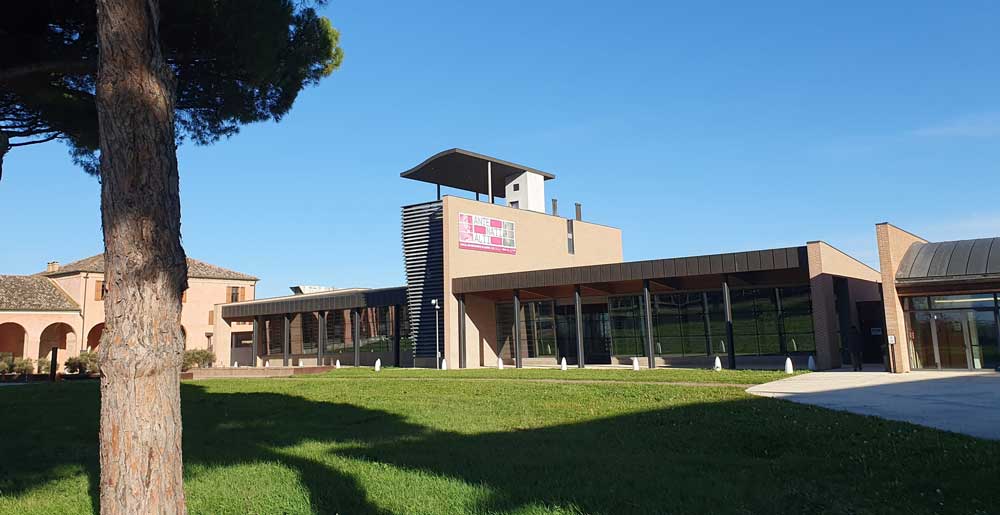
There’s not much to Altino nowadays: a few houses scattered along a country road on the Veneto mainland, a church and a museum. If you didn’t know its backstory, this patch of flat reclaimed farmland near the Venetian lagoon would seem wholly unremarkable. Your only clue to its historical importance is the imposing modern museum standing next to a canal among ploughed fields.
A lot of money has clearly been spent in recent years on Altino’s archaeological museum (Museo Archeologico Nazionale di Altino AKA Parco Archeologico di Altino), but when I get off the bus from Venice and head into the ticket office on a November weekday, I find I’m the only visitor. I soon learn that the museum’s nearby archaeological park is closed for winter, and one floor of the building is also closed for refurbishment. But I’ve been waiting a long time to come to Altino, so I make the best of it.
On this page you’ll read about the related history of Venice and Altinum, my visit to the museum and its most interesting exhibits, how to get to the museum in Altino by public transport from Venice, and the possibilities for spending more time in Altino.
Roman Altinum and the origins of Venice
Why is there a fancy museum here in tiny Altino in the middle of farmland?
We are on the site of a vanished town, ancient Altinum. One of a chain of Roman towns along highways by the Adriatic sea, Altinum was a strategically-sited pre-Roman settlement which grew and prospered thanks to its excellent trade and communications routes across both the mainland and the Adriatic. But after the break-up of the Roman Empire repeated ‘barbarian’ invasions during the 5th and 6th centuries AD left these towns vulnerable and repeatedly sacked. Being on the main road south was no longer a benefit, so the city-dwellers packed up their belongings, dismantled their homes and set out by boat to rebuild their lives in the fastnesses of neighbouring lagoons where invaders would struggle to follow them. Or so the story has been told for centuries.
The people of Aquileia established seaside Grado, the residents of Julia Concordia (Concordia Sagittaria) headed seawards towards present-day Caorle, and the residents of Altinum travelled by boat into the Venetian lagoon, where they founded island settlements, Torcello being one of the most important. When Torcello, choked in mud, was abandoned in its turn, the enterprising lagoon population congregated around a muddy archipelago which is now the beautiful canal city of Venice. This is the foundation myth of Venice, and it’s not too far from the truth. In recent years archaeologists have been investigating what’s left of Altinum to learn more about the Roman city itself and also about the origins of Venice.
Museo di Altino
The archaeological museum at Altino is unmissable if you’re interested in the origins of civilisation in the Venetian lagoon. Even if, like me, you find parts of the museum closed when you visit (always a hazard in Italy), there is still a wealth of exhibits and information to study and appreciate. The layouts and displays are excellent and modern. English-language summaries are provided alongside more detailed Italian text on information panels, although object labelling is in Italian only.
The ground floor of the museum: Before the Romans
Finds on display start with prehistory, and with evidence of Bronze Age settlement in this area. Things get really interesting as we move on to the pre-Roman inhabitants of this part of Italy, the ancient Adriatic Veneti people.
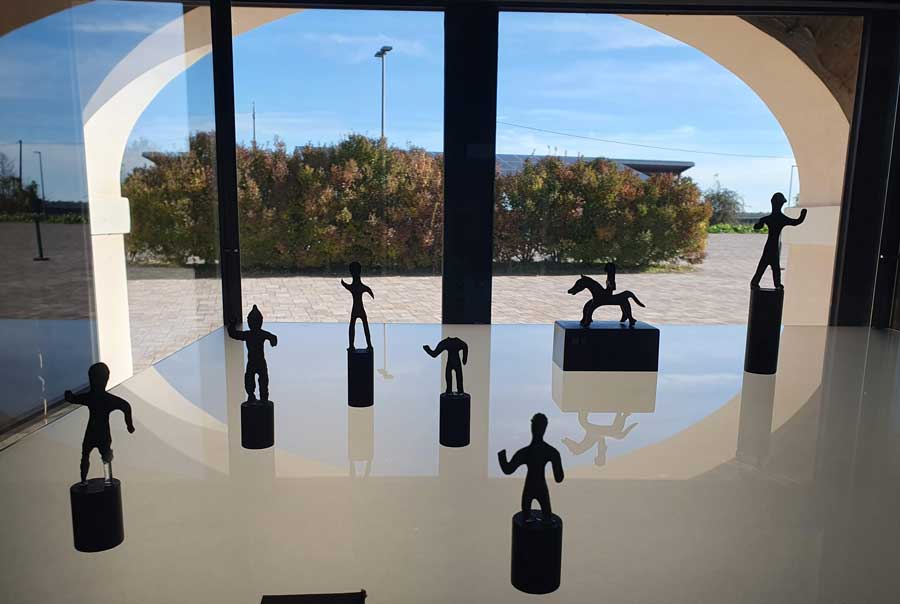
This museum is on the site of a waterfront sanctuary to the local god Altno/Altino, whose name was shared with the town which grew here. Offerings from this temple include bronze statuettes, one holding its own offering on a plate (I like the meta nature of this). There are inscriptions with examples of the Venetic language, 5th-4th century BC burials, and intriguing evidence of Celtic influences and migration, including 4th-2nd century BC inhumations conforming to Celtic traditions and containing weapons. A sword is described as being ritually broken into several pieces.
Throughout the museum I appreciate seeing evidence recording the names and likenesses of women from the distant past. It’s clear that Altinum had female inhabitants with a high status in their society. One early memorial inscription on display (5th-3rd century BC) is dedicated in Venetic script to two women, one called Ostiala, who must have been important to be honoured with this large stone monument.
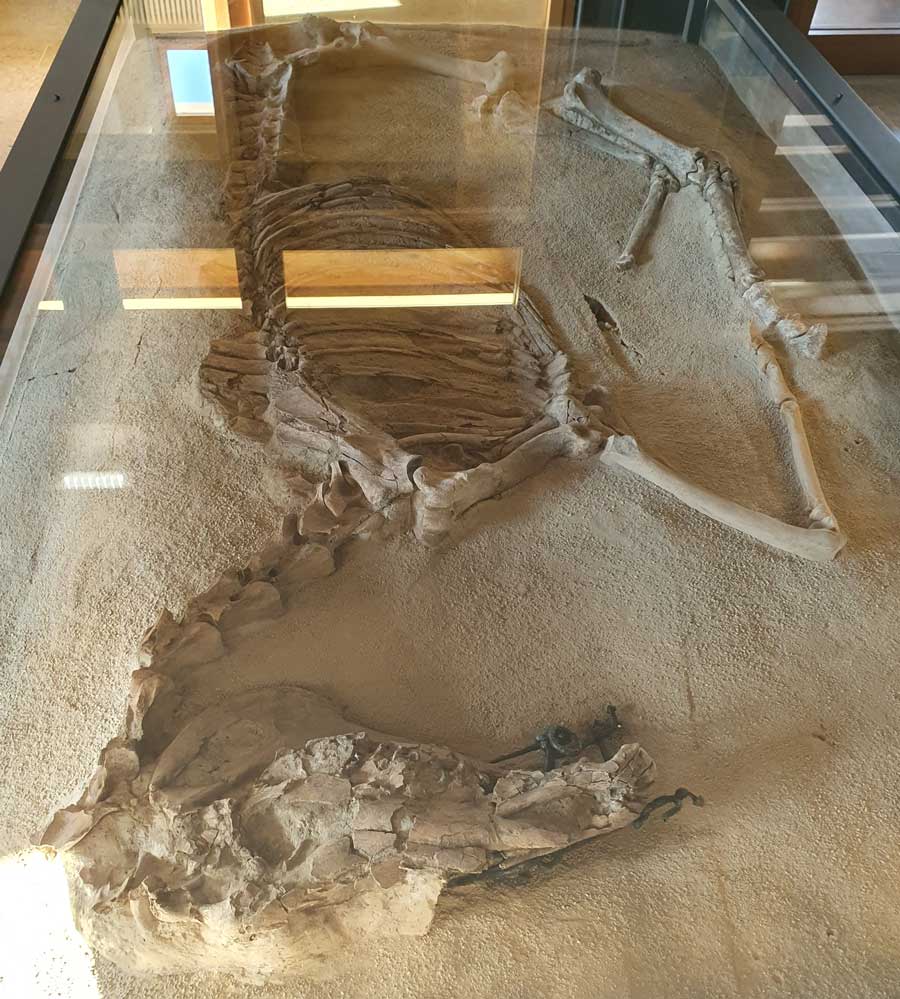
The people of the Veneto were famed in antiquity for the horses they bred and also sacrificed, and excavations in Altino uncovered a large number of horse burials. Two are displayed here, one buried with its bridle.
The first floor of the museum: The Romans are coming
This is the section of the museum which really brings home the significant size and wealth of Roman Altinum. The fact this city was almost forgotten for over a thousand years after its buildings disappeared means it has been easy to overlook or underestimate its importance. Surveys in recent years have revealed the impressive footprint of the city’s buildings, including two theatres, a large forum and an amphitheatre: a revealing and dramatic use of modern technology.
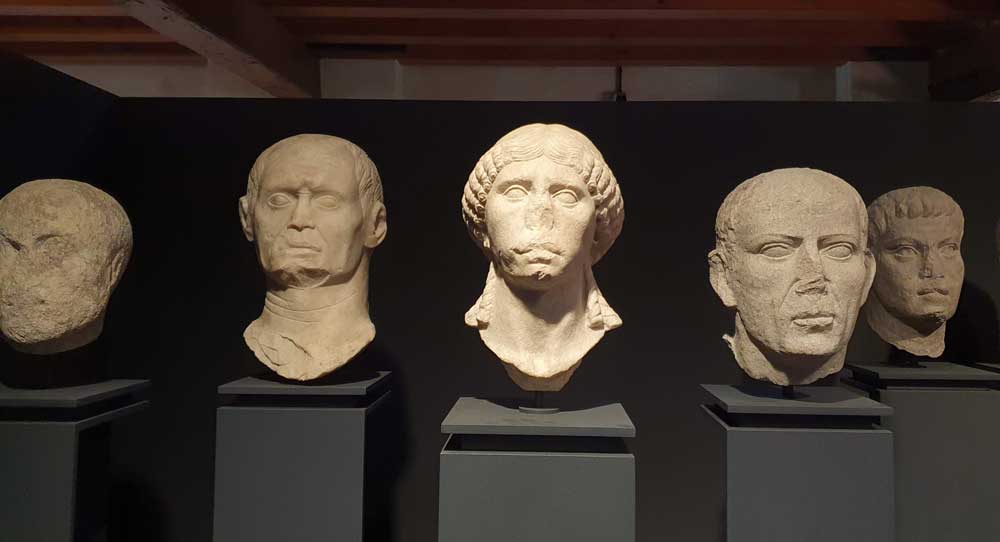
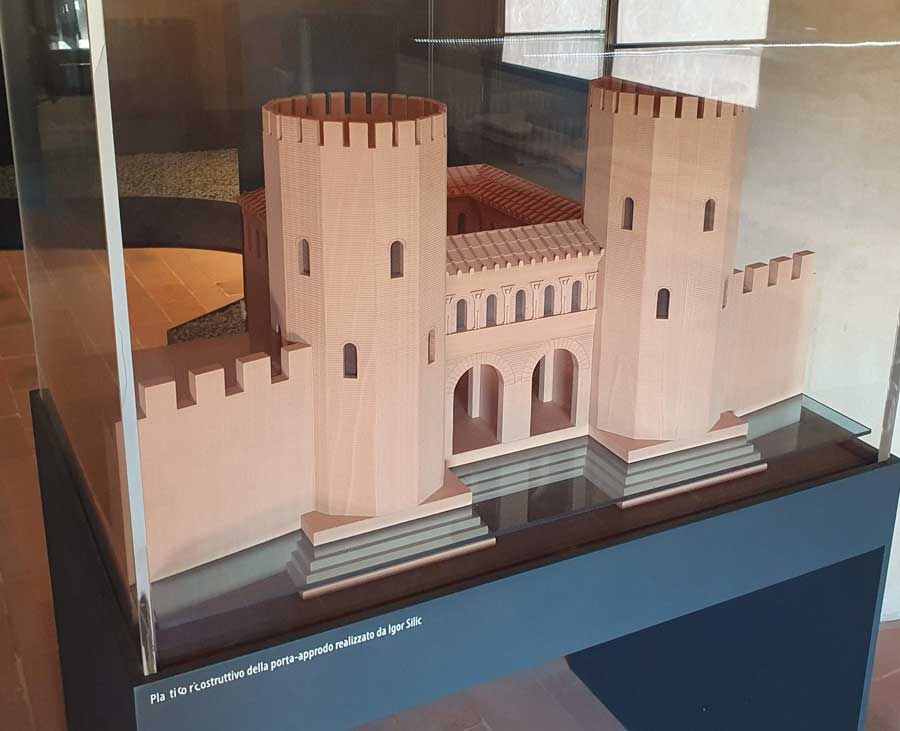
The museum route which winds through display cases and sculptures gives a mesmerising overview of Altinum. There is a model of the great water gate which stood at the city’s access point from lagoon and sea. Evidence of international trade found by archaeologists includes one particularly significant item: a weighing scale, a steelyard balance, inscribed with several different systems of measurement, ideal for cross-cultural trade.
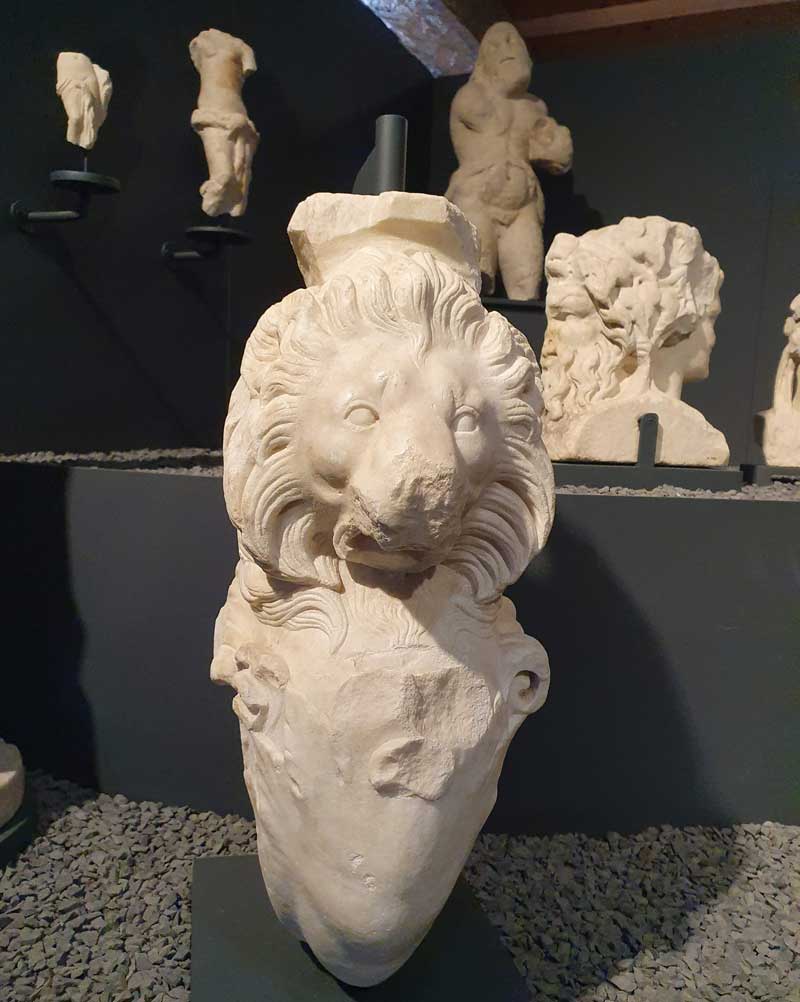
Marble sculptures and fragments of fresco testify to the opulence of the city’s canalside villas and gardens. Like Venice, Altinum was a city between land and water. Unlike Venice, Altinum’s foundations were on the mainland, but the lagoon provided access to the sea, and watercourses were coralled to run through and around Altinum to the lagoon. The relationship of the town to its waters are evidenced in artefacts displayed here like fishing weights; the lagoon wasn’t just a thoroughfare but a valuable resource, as it was to later Venetians.
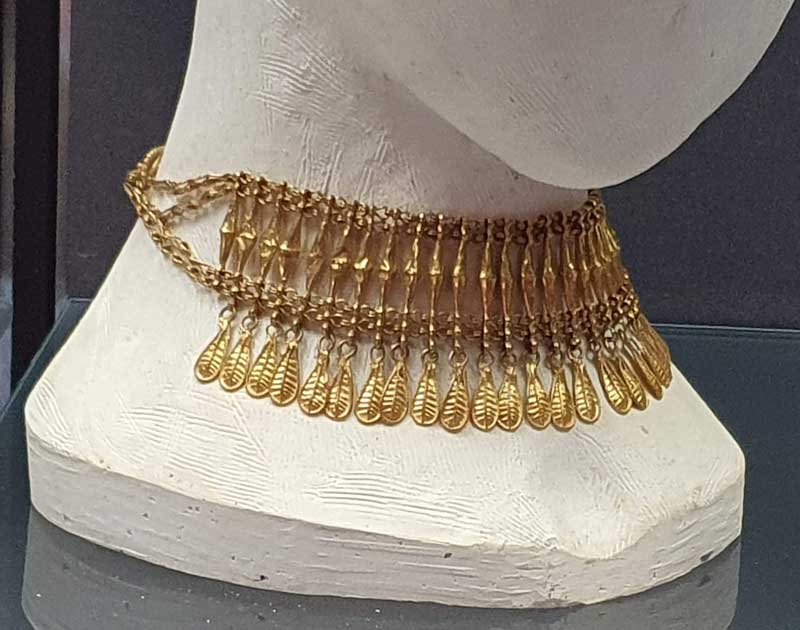
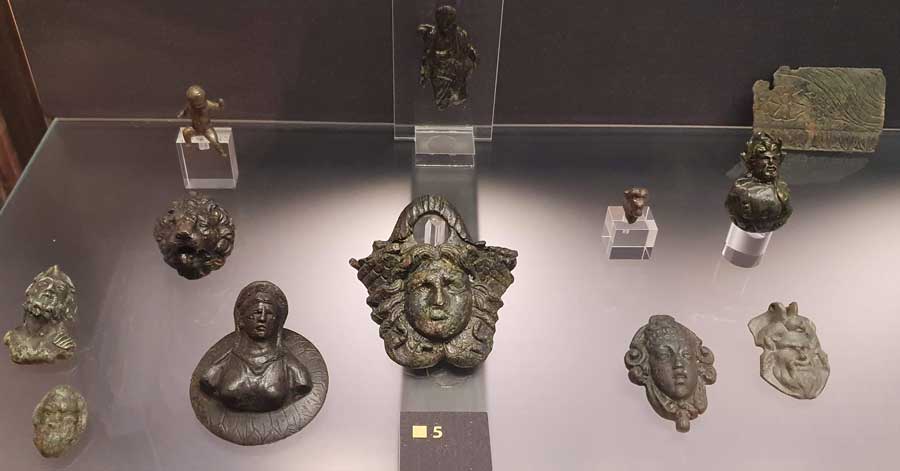
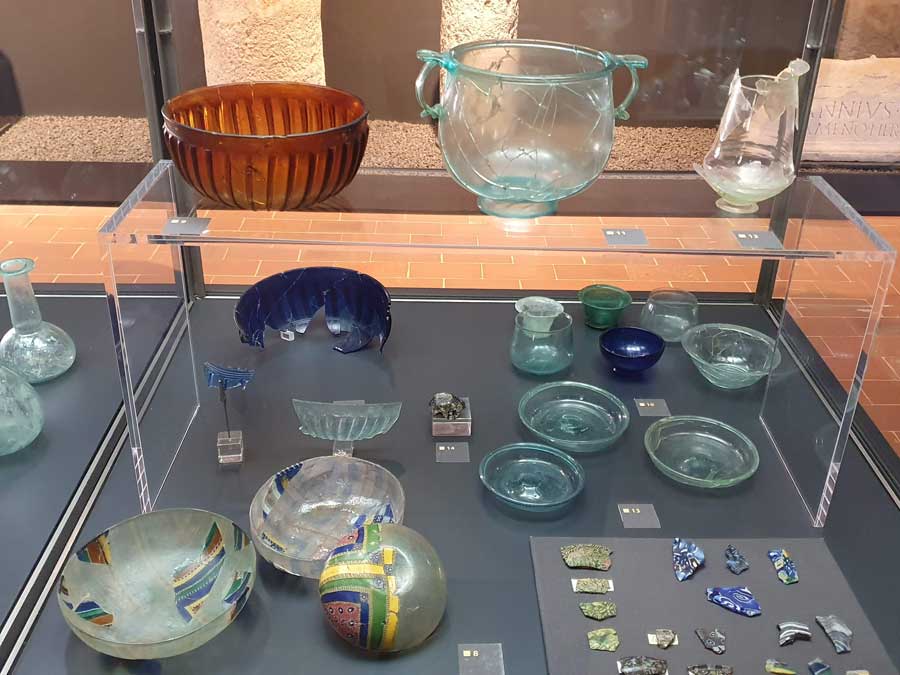
Smaller finds also highlight the luxury enjoyed by the city’s wealthiest residents. The finest object on display is probably a delicate tiered gold necklace created by a jeweller in or from Taranto in the south of Italy. Coloured glassware, pottery and bronze ornaments and fittings add to the picture of a prosperous city. And the owners of some of this wealth are here too, sculpted in stone, their busts created for funerary monuments: the ancestors of Venice staring out at modern visitors.
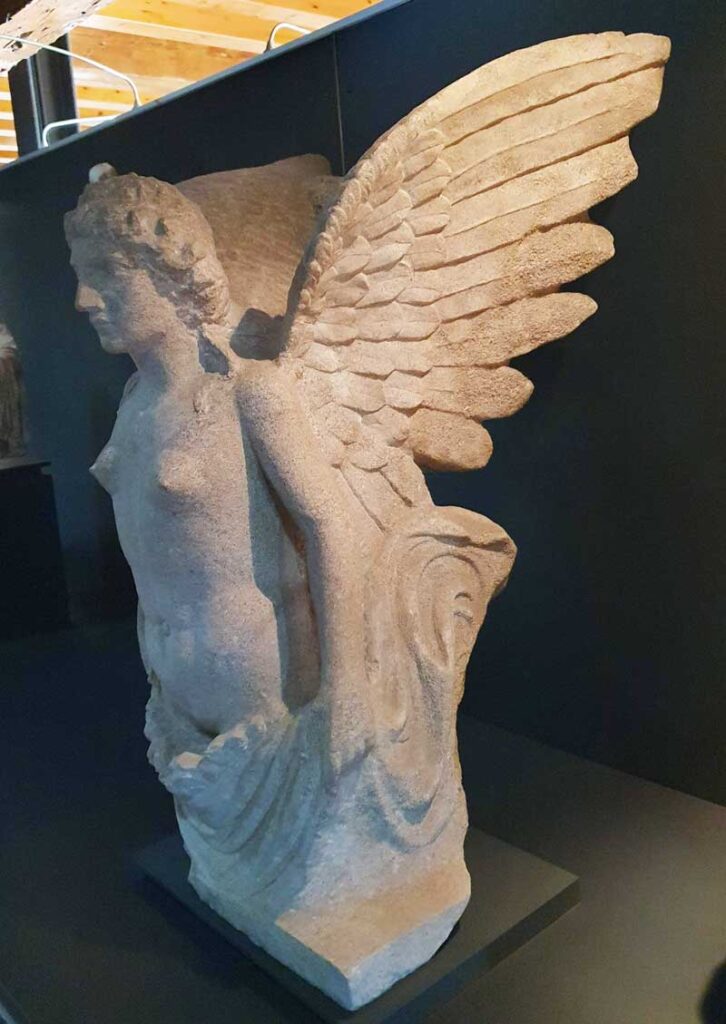
Many of the sculptures here are truly fine and although the labels provide a lot to read, I find I’d have liked still more information on some of the exhibits.
The second floor of the museum is closed for rearrangement or refurbishment when I visit. It covers late antiquity and, presumably, the decline and abandonment of Altinum. Hopefully I’ll be able to visit on another occasion once this is open, and will write about it then. (In the meantime there are some excellent videos on YouTube with reports from local archaeological digs which investigate this period).
Once I finish my tour of the main building, a museum attendant leads me to to another wing of the museum, on the site of the Sanctuary of Altino and now home to the Guarienti Collection, an assembly of monuments from Altinum.
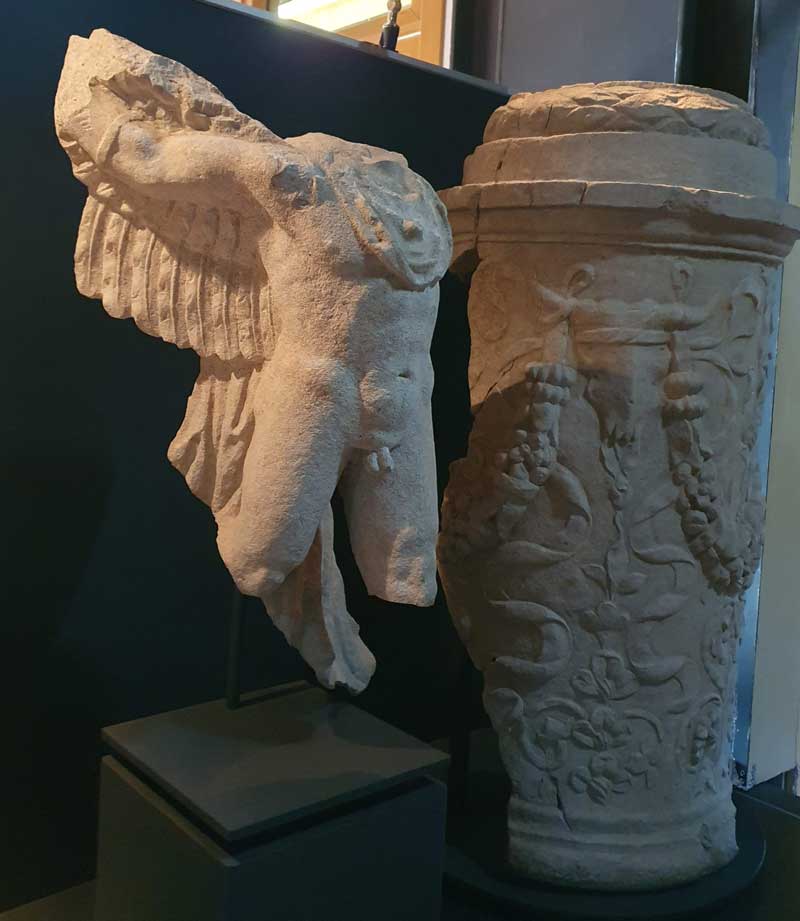
Archaeologists are faced with an interesting task in excavating and interpreting Altinum. First the city was used as a quarry and systematically stripped of building materials and anything else of value. Then, a thousand years later, from the 1850s and through the 1900s this area, neglected and marshy, was drained and ‘improved’ for agriculture. Drainage works, ploughing and farming turned up relics from the ancient town, including funerary monuments. The wealthy landowning family built up a collection of sculptures, some of which finally ended up in the hands of the Italian state in 2017 and is displayed here in the Altino museum.
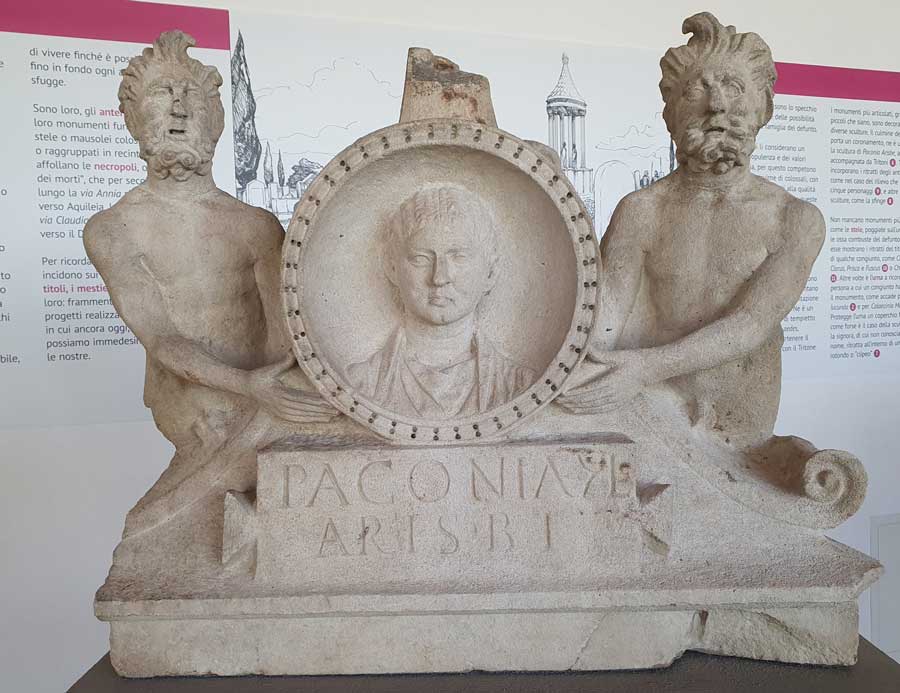
There are several highly interesting monuments in the Guarienti collection, accompanied by a ‘meet the ancestors’ type film installation. Perhaps the most evocative funerary monument is that dedicated to former slave-turned-landowner Paconia Arisbe, a woman freed by her female owner Paconia. A medallion of her likeness is presented by two tritons. I’d like to think that the tritons here as well as another sea monster snaking along a stone pediment, are reminders of Altinum’s close connection to the lagoon and sea.
Ploughing over the last few decades has churned up the foundations of Roman buildings, which are unusually close to the ground’s surface here. So what is left for archaeologists nowadays is stripped back, plundered, damaged and vestigial. Still, this still offers an access to the city’s foundations that is rare in Italy, where most Roman towns are still thriving today, their archaeological strata almost impossible to access under later buildings. Here in Altino archaeologists are discovering more of the site’s history every year, and of course the late-antiquity ‘quarrying’ of the buildings is part of the story being uncovered, casting new light on that Venetian origin myth. From the friendly museum staff I pick up some interesting titbits from the most recent excavation into an early Christian basilica, where burials were disturbed in later times in order to access building materials beneath.
A museum overview
From books and archaeological videos I thought I knew a fair amount about Altino before I finally made my long-intended visit to the museum. But I learn a huge amount from spending time here: from the contextual information provided, from the visual impact of the extensive collections, from conversation with a well-informed staff member and from experiencing the unremarkable-remarkable setting of hidden Altinum.
Visitors are given a great opportunity for a literal overview of this historical site. A stroke of genius from the museum’s architects was designing a tower from which you can survey the farmed landscape where Altinum once stood. Turning towards the Adriatic, Venice’s lagoon is visible only a short distance away, beyond a road. I am thrilled to stand here and look from the fields covering their secrets to the lagoon where the great basilica and bell tower of Torcello are visible. The journey those long-ago migrants made from Altinum towards a future Venice was between fundamentally different realities but such a short physical distance.
Altino beyond the museum
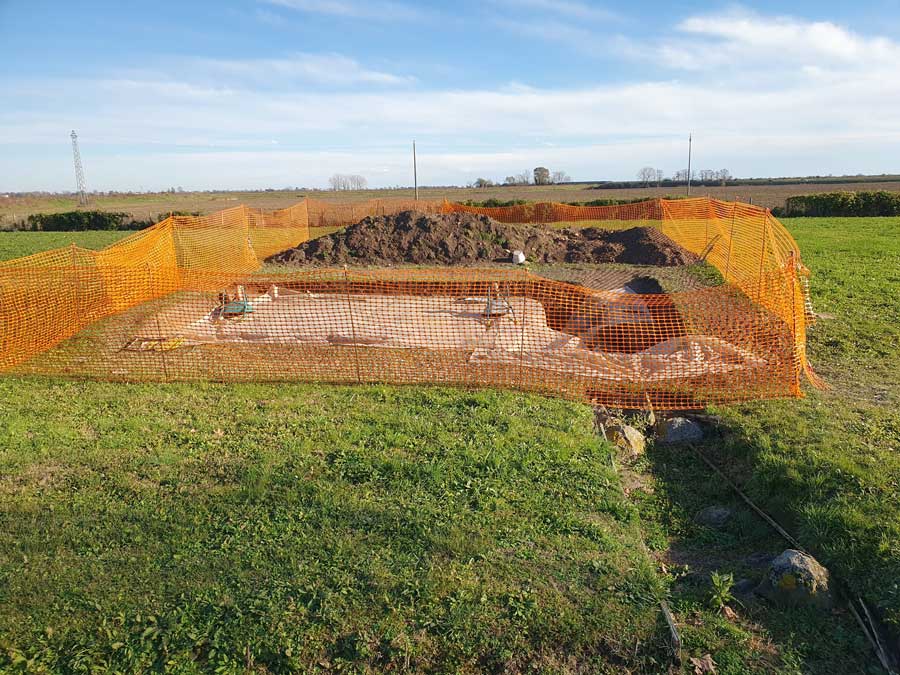
There is an area denominated an archaeological park a short distance along the road from the museum. Although this is closed for the winter when I visit in November, it can be viewed from the road, so I follow directions from the museum staff and head along the pavement until I reach the old museum building, standing around a grassy square where the hamlet’s church is also located. Crossing the modern road I look over a field where a stretch of Roman road is uncovered, alongside building foundations and a mosaic floor. A few yards away is a currently active excavation area, covered for protection.
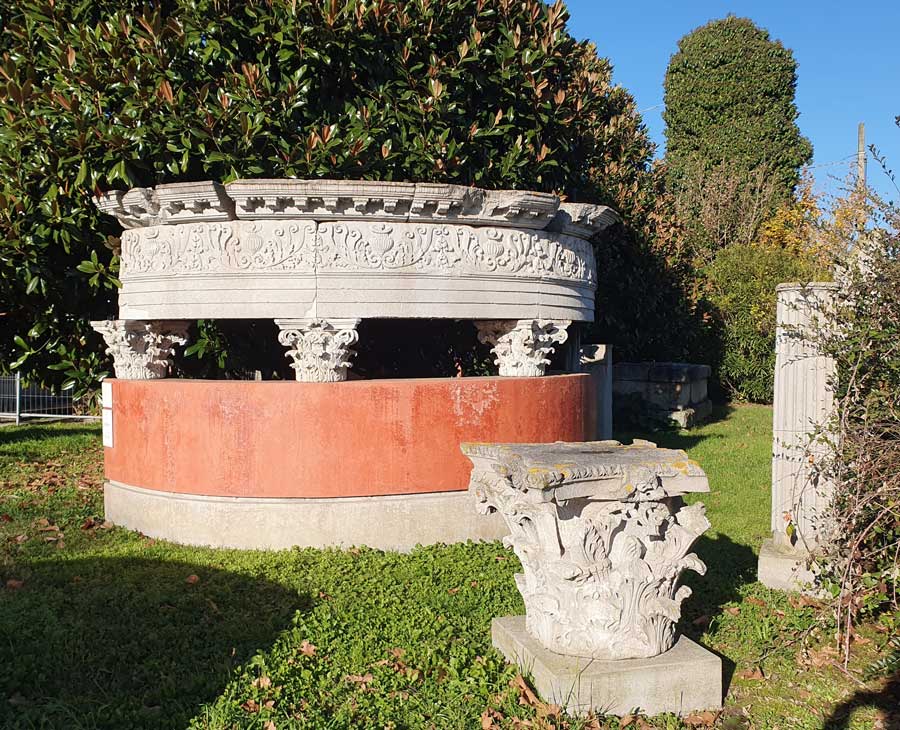
I’m surprised to find that not all the exhibits have been moved (yet) from the old museum to the swanky modern building down the road, where I believe there is space waiting for them. Under a portico I inspect an epigraphic collection, which includes funerary inscriptions. Between the building and the road, a larger monument is part-reconstructed alongside other sculptural fragments.
It’s a sunny day and I’m tempted by a pedestrian/cycle path heading away from the road over a very modern bridge. But instead I head back towards the newer museum, where I’d seen another enticing path alongside a canal, which I hope may bring me close to the heart of ancient Altinum.
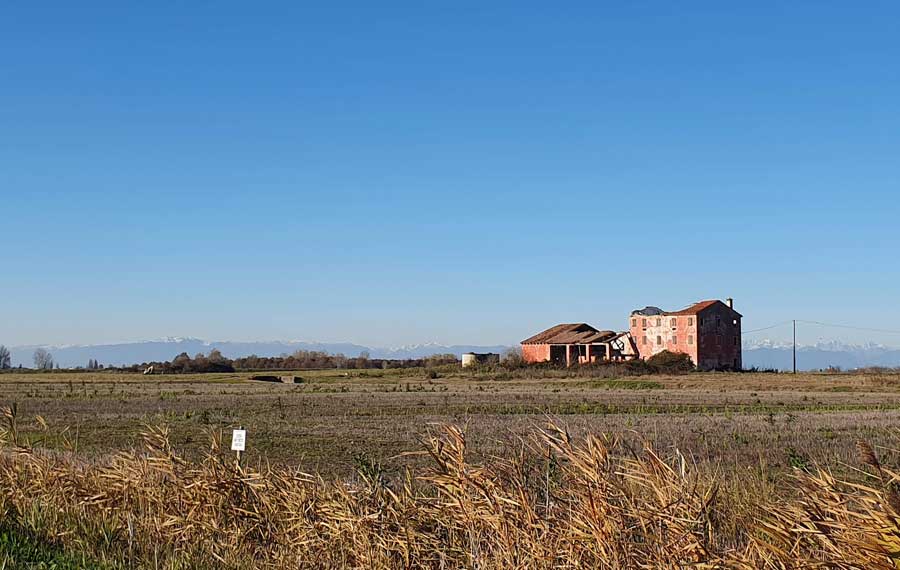
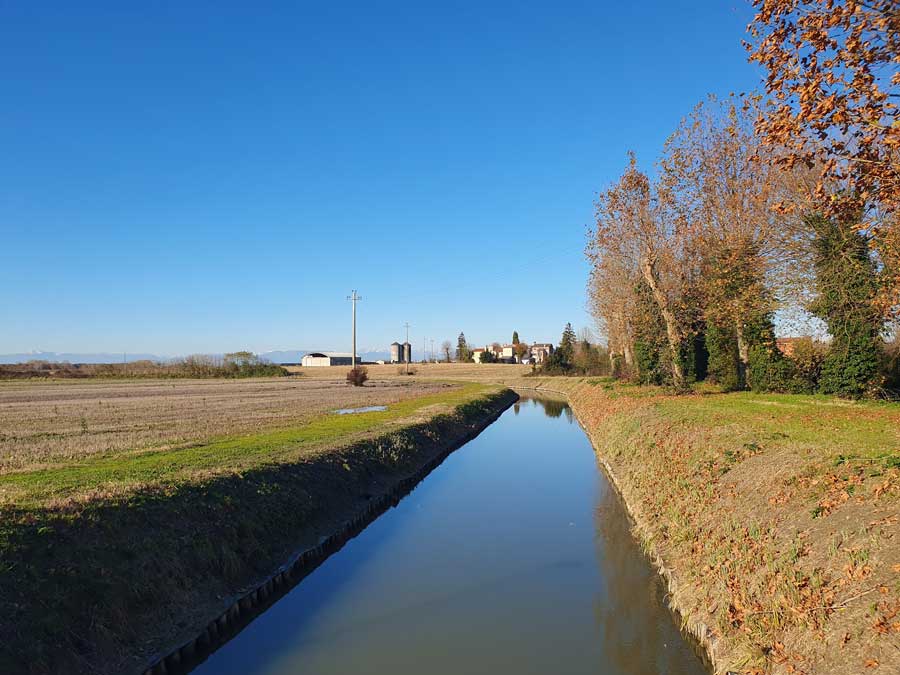
Across the road from the modern Altino museum, this path starts picturesquely alongside a canal before crossing over and winding towards a high bank protecting the farmland from a larger waterway, invisible from the path. I don’t have long before my bus is due, so I keep an eye on my watch as I walk. There is, of course, no visible sign of the Roman city, but as I gaze over the ploughed fields I think I can see a couple of vehicles parked by what might be an another archaeological dig. The view is memorable: flat fields, a semi-ruinous building and the Dolomites in the background.
Several cyclists pass as I hurry back towards the road and bus stop, and I rather wish I had wheels or at least time to walk a bit further in the glorious November sunshine.
I spend so long in the museum that I don’t have time to eat in Altino, but visitors enjoying a leisurely day out or passing through on a driving tour will be pleased to discover two restaurants in Altino. The Trattoria Antica Altino is over the road from the modern museum and Le Vie Altino is a short distance away by the church and former museum buildings. I smell frying fish from the trattoria as I walk along the canal footpath, which evokes in me a brief vision of the bustling Roman streets that were once here.
Travel to Altino by bus
I travelled by bus from Venice to Altino. This is a straightforward journey, though time-consuming. As I spent two hours at the museum (I’m thorough!) and then explored further, this ended up being nearly a full day trip in the short days of winter.
Buses which stop at Altino (the bus stop is Altino Museo) are extra-urban services operated by ATVO (ATVO timetables). I caught the 25A, which starts at Venice’s bus terminus, Piazzale Roma, and calls at Mestre railway station and Venice Airport before passing through Altino.
I’d recommend checking the bus timetable closely. Not all services in this direction are scheduled to pass the museum. And in the return direction, not all services continue past Mestre over the road bridge into Venice. Note the timetable varies according to days of the week and the school term (check carefully for the codes and annotations), with fewer buses on Sundays.
At present you still need to buy ATVO bus tickets in advance online or in person. I bought my tickets (outward and return) from the ATVO ticket office in Piazzale Roma, Venice, beneath the multi-storey car park facing over the bus lanes, where the staff member was helpfully proactive in checking timetables for me and directed me towards the correct bus stop.
When the bus arrived in Venice it displayed its end destination (San Donà) rather than the number displayed on the published timetable. I asked the bus driver to tell me when to get off, and was impressed he remembered 40-odd minutes later. It’s actually fairly clear where to alight, t though, if you’re following the journey on a map. The bus stop is right by the museum’s entrance gateway, and the return bus stop is over the road, with an additional bus stop further along the road away from Venice, by the old museum and archaeological park.
Visiting Altino by car
There’s a car park at the museum, so this is an easy destination for drivers, unlike some city-centre museums.
Visiting Altino from Venice Marco Polo Airport
If you are very organised and time-conscious, it would be possible to visit Altino museum from Venice airport either before or after a flight. The bus from Venice to Altino calls at the airport on the way, and Altino is only a few minutes from the airport. I had considered doing this on my departure day, but decided I’d rather tour the museum without a strict time limit. Obviously planning an excursion like this would require close attention to bus timetables, or using a taxi from the airport. There’s left-luggage at the airport for any necessary suitcase storage.
Visiting the museum: advice
I’d recommend allowing plenty of time to stroll around the museum and engage with displays and exhibits. I spent about two hours at the museum, even though one floor was closed (admittedly I was taking notes, and other visitors could comfortably stroll through more quickly). I also appreciated my brief exploration of the countryside and glimpses of excavated areas and recent digs.
The Altino museum (official name Parco Archeologico di Altino) is run with ambition and enthusiasm. I have the impression that future plans (funds permitting) will expand its offering further. The museum is intended to be connected with its archaeological park by additional pathways; it would be great to experience more actively the connection between the city-site and its museum.
There are frequent events (in Italian) for learning more about the museum and ongoing discoveries at Altino. The best resource for updates seems to be the museum’s active Facebook page: facebook.com/parcoarcheologicoaltino/ (a tip for Italian museum-going: social media which can be accessed and updated by keen museum staff can be much more helpful than official government or regional webpages).
The museum is closed on Mondays. Check seasonal opening times before you travel. If you don’t read Italian, consider a translation app to help interpret some of the labelling, which is informative and insightful and adds a lot to one’s understanding.
This is a really excellent museum and I highly recommend visiting. There are many fascinating exhibits and displays which I haven’t had time to include here, but which keen students of history will enjoy discovering for themselves.