About Padua: Tourism and practical information
Padua (Padova) is a large town (population 210,000) in the Veneto region in north-eastern Italy. Padua is home to an ancient university, and parts of the town centre have a very studenty feel to them: young people revising under shady trees or meeting up before lectures. Successful modern business exists alongside unspoilt historical sights, and there’s lots for the visitor to do. There are some troubled housing areas in the outskirts, but these don’t impinge on the tourist’s experience. Padua’s nearest equivalent in Britain would probably be Oxford, and while the Italian town may lack punting undergraduates, it can match Oxford’s dangerous cyclists.
> Tourist attractions and museums: a Padua itinerary
Visiting Padua
Padua’s biggest tourist attraction is the Scrovegni Chapel (Cappella degli Scrovegni), with its priceless frescoes by Giotto. Despite the town’s many other interesting sights, this is the only place in Padua where tourism has taken over. The Basilica of St. Anthony of Padua (known simply as Il Santo) is also on some tourism/pilgrimage circuits but through the rest of town you’re more likely to encounter students and smartly-dressed businesspeople than tourists.
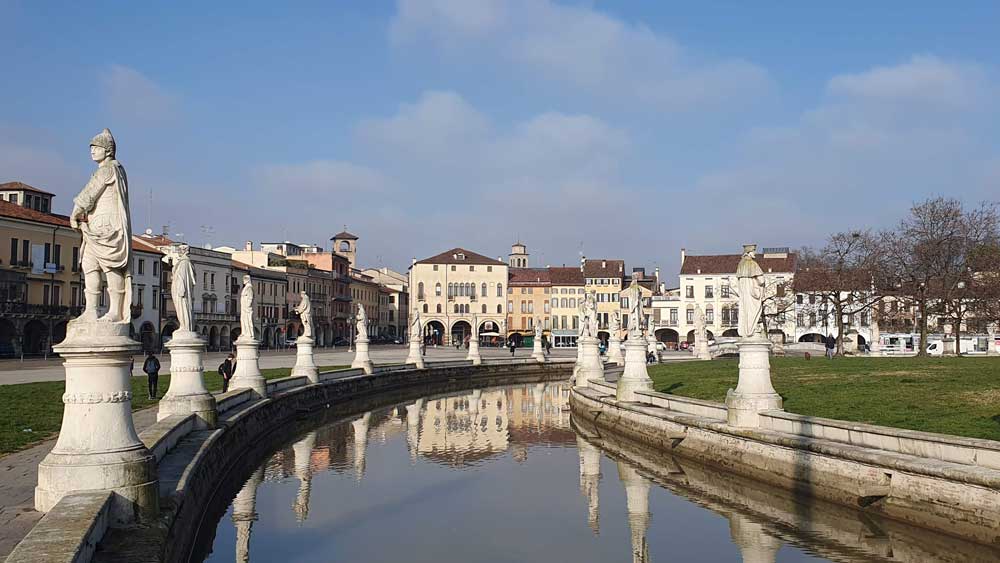
There is a lot more to Padua than these two sights, however (here are my highlights). The town centre is an attractive place to explore, with many historic streets to wander. It’s always been a wealthy town, and has fine architecture dating to different eras. Giotto’s are not the only frescoes in town, and the art-lover has masses to admire in the town’s churches and art gallery. And after the visitor has enjoyed Padua’s lovely parks and gardens, and strolled the pleasant arcaded streets, there is still plenty to do in the area around the town: villas to visit, boat trips and thermal spas.
The keen traveller really needs more than one day in Padua. Many of the town’s attractions have limited opening hours, sometimes with lunch breaks, meaning that you will need to plan your schedule carefully to fit everything in. If Padua appeals to you, I’d recommend staying several days and giving yourself time to potter around, see the city’s sights over two or three days with plenty of time for food and drink, and add on visits to local villas and maybe a boat trip. If you really only want to see the highlights, though, you can get an idea of the city in a shorter visit.
Planning ahead
The most important advice is to book in advance for the Scrovegni Chapel (which is combined with the Civic Museums). Tours are often fully-booked, so to avoid disappointment book at least a day or two in advance. Booking online with a credit card is the easiest method.
I’ve included suggestions for the best sights to see in Padua in my more detailed guide to the city’s attractions: Padua tourist sights. This may help give you ideas for planning an itinerary and pacing your visit. I’d suggest checking for any local combined tickets (these have changed in recent years) or for any interesting temporary exhibitions during your stay.
Arriving
If you are travelling by train, you’ll arrive just north of the town centre. Leaving the railway station, take care not to get run over; what appears to be a pedestrianised forecourt is also a taxi lane. In fact, pedestrians need to be alert throughout the city centre; cyclists are a very real hazard.
Pay a visit to the tourist information office next to the station if you want to pick up a map or leaflets. There are bus stops outside where you can catch a bus into the centre – buy a ticket before boarding, or pay on board with a payment card. However, it’s not a long walk to the heart of town. The Scrovegni Chapel and Civic Museums are between the railway station and the centre. To walk there, take the main street opposite the station and keep straight on. Just after a pretty park you’ll come to the Civic Museums. The entrance is a short way down a side-street. Alongside is Padua’s Roman arena, now grassy ruins.
Eating and drinking
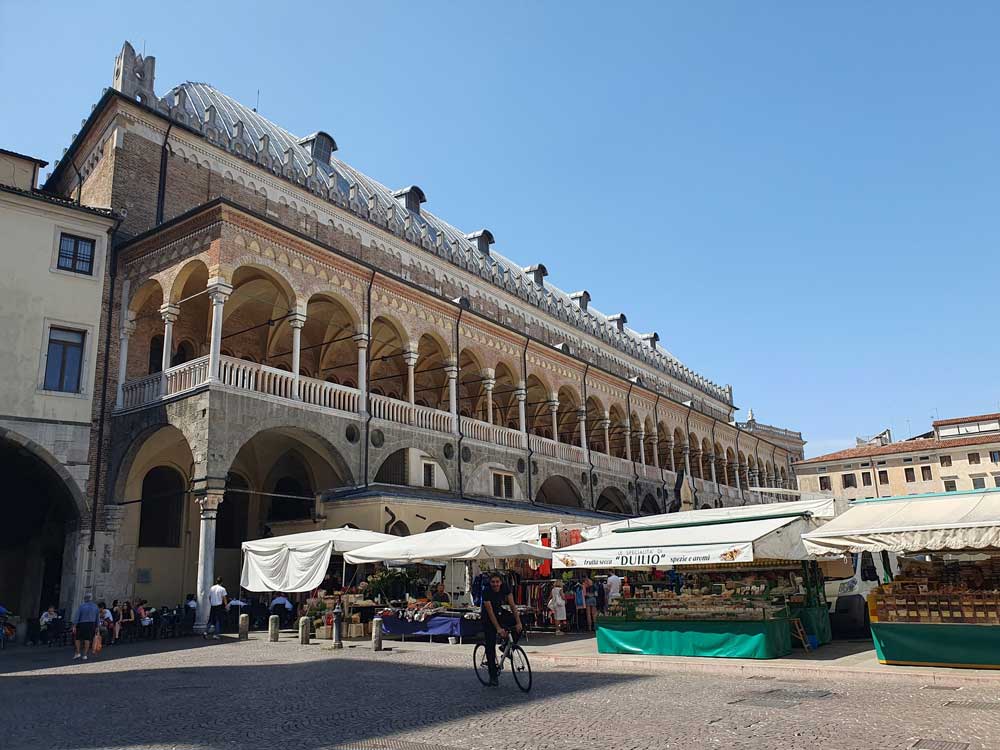
If you’re busy sightseeing and just want a quick picnic, you’ll find plenty of ingredients in the market around the Palazzo della Ragione. There’s also a Pam supermarket close by. Nice places to eat picnics include the public gardens off Corso del Popolo and the big piazza at Prato della Valle.
Around the markets there are also lots of bars and take-aways where you’ll be able to buy rolls and snacks, as well as restaurants for a more substantial meal. I’ve had a couple of delicious cheap pasta lunches at friendly, no-fuss Pastasuta, which has two small venues in the market beneath Palazzo della Ragione.
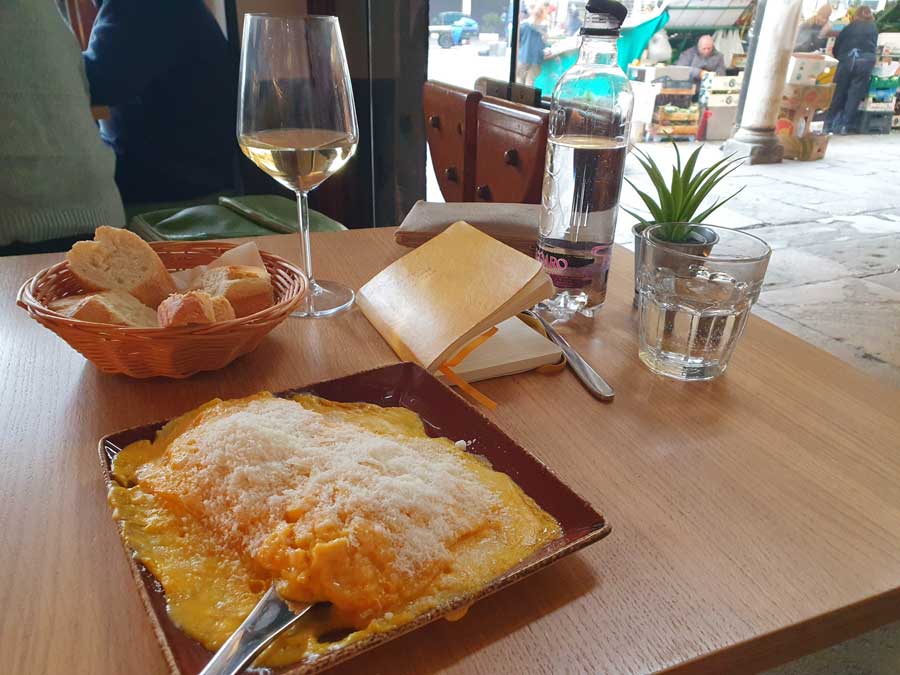
For an afternoon treat you won’t have to look far to find a refreshing ice cream or fruit sundae. Gelateria Gnam Gnam in Via San Clemente near the Piazza della Frutta offers tasty organic gelati with vegan and dairy-free options. And there’s a branch of Grom, a good-quality Italian gelato institution, nearby in Piazza dei Signori.
Tourist information offices
Tourist information offices are always a good to start, and the Padua APT (tourist information board) stocks some useful maps and leaflets and can give adivce. There is one tourist office just outside the station, to the right as you exit the building. Another hides behind Caffe Pedrocchi.
Padua travel
The most convenient airports for cheap UK flights are Venice Marco Polo (Easyjet, BA) and Venice Treviso (Ryanair). From Treviso Centrale station, the journey to Padova is an hour by train (change at Mestre). The Treviso Airport – Venice ATVO bus service stops by Mestre station. If you’re arriving at Venice Marco Polo Airport, you can catch a bus to Mestre and then take the train to Padua. There is also a direct bus service, run by SITA from Marco Polo Airport to Padua bus station – the journey takes an hour and ten minutes, and the frequency of buses varies from half-hourly to hourly during the day. Don’t forget the destination will be listed as Padova, not Padua.
Padua has an efficient local transport network, with several bus routes linking the main attractions and the railway station. It helps if you’ve already picked up a streetplan, as bus information boards tend to list abbreviations of street names as destinations. If in doubt, check with the driver or a local.
Things to do around Padua
Venice is just 20-40 minutes from Padua by train, depending on which category of train you take, making it an easy day trip. Treviso is another pleasant Veneto destination, and Vicenza is just a short train or bus trip away.
The countryside closer to Padua has plenty to offer without travelling further afield. Picturesque villages and villas abound – the tourist information office can supply information and bus timetables for planning days out. An expensive but comfortable way to visit some of the villas along the Brenta is to take an organised boat trip. Several different companies organise these excursions; the full-day version cruises all the way from Padua to Venice, stopping to visit three villas en route. The spa area around Abano Terme, a few miles away, offers relaxation after busy urban sightseeing.
> Book a hotel or B&B in Padua
> Tourist attractions and museums
On this site
Veneto art & architecture itinerary
Useful external links
Veneto destinations
- Veneto region
- Abano Terme
- Asolo
- Bassano del Grappa
- Brenta Canal
- Caorle
- Castelfranco Veneto
- Chioggia
- Cittadella
- Concordia Sagittaria
- Conegliano
- Cortina d’Ampezzo
- Lido di Jesolo
- Malcesine
- Marostica
- Monselice
- Montegrotto Terme
- Padua
- Portogruaro
- Rovigo
- Sottomarina
- Treviso
- Venetian Lagoon
- Venice
- Verona
- Vicenza
- Veneto art & architecture itinerary
- Veneto villas – Vicenza: La Rotonda & Villa Valmarana ai Nani
- Veneto villas – Villa Pisani & Villa Foscarini Rossi, Strà
- Venice Airport
- Treviso Airport