Charming hilltop villages right on Rome’s doorstep, sprinkled with once-grand palaces and famous for the production of white wine
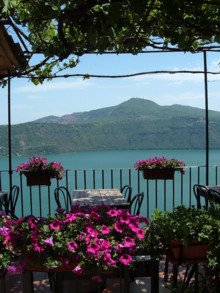
The expression Castelli Romani translates literally as ‘Roman Castles’, but in fact the name refers to a collection of wine-producing hill-towns to the south-east of Rome. These small towns and villages are scattered over the wooded slopes of the Alban Hills (Colli Albani), a landscape created by long-ago volcanic activity. The circular craters of Lake Nemi and Lake Albano, testament to the area’s geological past, are among the most attractive natural features of the Lazio region.
Home to successful civilisations before the Romans began throwing their weight about, the Alban Hills became a rural retreat for the city’s wealthy residents. Nowadays the tiny towns are still dominated by the great villas and palaces built by the area’s richest and most powerful families. Some were destroyed in the Second World War, when the area was heavily bombed. Others have been converted into hotels or municipal offices, or taken over by wealthy companies and religious organisations. Other villas are still crumbling; faded reminders of a dissipated society.
Today the towns are prized for their produce: DOC wines such as Frascati, strawberries, peaches, meats, fish, flowers and more. Although fairly popular as weekend day trip destinations (especially for Romans who come to dine well), the towns don’t have a tourist feel. There are plenty of places to eat and drink, but tourist information kiosks – if you can find one – are often closed, and visitors might want to do their research in advance.
Frascati
Frascati is the most well-known of the Castelli Romani, and the most visited. Just a short journey from Rome, the town is famous for its white wine, and is a popular destination for Romans looking for fresh air, good food and drink and a pleasant day out. The most imposing building in Frascati is the grand Villa Aldobrandini, with gardens that are open to the public.
> More about Frascati.
Castel Gandolfo
Castel Gandolfo is the summer residence of the Pope; an attractive hill-town dominated by the Papal Palace and its extensive gardens. The historic town centre is charming, and there are lovely views over Lake Albano.
> More about Castel Gandolfo.
Genzano
Genzano, which is above the crater of Lake Nemi, has a pleasant main shopping street, and a tourist information kiosk (limited opening) on its main square. Nearby is a pretty fountain with carved columns. Behind the church of S. Maria della Cima, uphill from the centre, is a belvedere with views over the lake. Genzano’s grandest building is a ducal palace – Palazzo Sforza Cesarini (17th-18th century) which sits rather sadly with ground floor windows bricked up. The town is well-known for its Corpus Christi floral displays. Can be reached by Cotral bus from Rome.
Albano Laziale
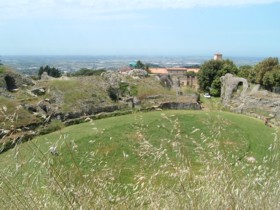
Albano Laziale, at the end of the Castelli Romani railway line, is a busy town with a lengthy history. On a steep slope leading up to the Lake Albano crater, Albano’s Roman ruins include a grass-covered arena, bits of fortified wall and town gates, and the ruined Baths of Caracalla, later converted into a church.
Ariccia
Ariccia is famous throughout the region for its porchetta (roast pork). The small town’s greatest sight is the seventeenth-century Palazzo Chigi, designed by Bernini for Pope Alexander VII. A grand Baroque palace, it dominates its attractive piazza. The extravagant period interior is open to the public. Some of the scenes of Il Gattopardo were filmed here.
Velletri
Velletri, twenty-five miles from Rome, has a Camellia Festival every spring (March), with displays, sales and guided tours of local gardens. The town also has an archaeological museum with exhibits dating back as far as the Iron Age
Castelli Romani accommodation
The Castelli Romani area would be a lovely place to stay if you want to relax and enjoy a quieter, more rural atmosphere while nevertheless being in easy reach of Rome. Accommodation options include small hotels and B&Bs in the historic hearts of the small towns and villages, as well as countryside villas and rural retreats. Note that most of the hotels listed are only really convenient for travellers with hire cars, so if you are not planning to drive, read location details carefully and pick accommodation in a town or village location close to public transport.
> Castelli Romani accommodation
Some hotel highlights:
> La Locanda del Pontefice, Marino – with views over Lake Albano and Castel Gandolfo.
> Relais Chateaux Park Hotel Villa Grazioli – near Frascati, in an absolutely beautiful old aristocratic villa.
> Hotel Castel Gandolfo – excellent hotel right in the historic heart of Castel Gandolfo, with views over Lake Albano.
> Locanda il Mascherino – decent place to stay in the centre of Frascati.
> Tenuta Cusmano – an attractive rural option, with a pool and countryside views.
> Poggio Regillo – a popular and comfortable hotel close to Frascati.
>Villa Germaine -among vineyards near Ariccia, offering local wine and food.
Transport
The Castelli Romani area is served by Cotral buses departing from Anagnina, at the end of Rome’s Metro line A. To get to some of the smaller destinations you may need to change buses in one of the larger towns. Cotral sell day-tickets, which is a convenient way to travel around, ‘castelli-hopping’.
A small railway line runs from Rome’s Stazione Termini into the Alban Hills. Some services terminate at Frascati, others continue to Albano Laziale, via Marino and Castel Gandolfo. Check timetables in advance as services are not frequent. Tickets (costing just a couple of euros) can be bought at any news-stand at Termini – buy tickets for the return journey too, as the provincial stations are tiny and unmanned. The rail journey is very scenic, passing Rome’s aquaducts, vineyards and market gardens before skirting Lake Albano.
If you are flying into Ciampino Airport, staying in the Castelli Romani and relying on public transport, you can catch the train at Ciampino Station, or the bus at Anagnina Metro Station, without going into Rome.
The best way to see the Castelli Romani, though, is by car. You will be able to see more, and travelling at your own pace will enable you to get to the heart of this interesting and appealing area.
> Castelli Romani hotels and B&Bs
Lazio destinations
- About the Lazio region
- Anzio
- Bracciano
- Calcata
- Castel Gandolfo
- Castelli Romani
- Cerveteri
- Formia
- Frascati
- Gaeta
- Palestrina
- Pontine islands
- Ponza
- Rome
- Sperlonga
- Terracina
- Tivoli
- Ventotene
- Viterbo
Ruins and gardens
Useful external links