
Driving in Italy

Driving in Italy (especially in southern cities) is not for the faint-hearted. Italy Heaven’s preference is usually for public transport – see below for information on Italy’s good train services. But there is no denying that hiring a car gives you access to a different Italy. Away from the main centres of population, bus services can be few and far between, and neither buses nor trains will take you to the smaller or more remote attractions. If you drive, you are free to explore countryside areas, to make a detour to an interesting garden or castle, to pause for a picnic on a scenic hillside or make a pit stop at a local village restaurant. If you are renting a villa or hoping to see more of an area like Tuscany, a car is pretty well essential.
Italy Heaven now has a partnership with Auto-Europe, enabling you to book your Italy car hire online at competitive prices. Book your car hire now.
Trains in Italy
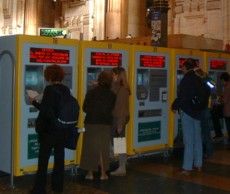
Trains are an efficient and cheap way to get about Italy. You can look up timetables and reserve tickets online at www.trenitalia.com. The rail service, Ferrovie dello Stato (FS), operates several different types of train. You pay per mile, and each type of train has a different price. Return tickets are the same price as two singles. It’s worth comparing a few options as slower trains can be much cheaper. Sometimes for a journey that is 20 minutes longer you can halve your fare – but do be sure to have the right ticket for the train you get on. The fastest, most comfortable service is the costly Eurostar. The most convenient way to buy tickets is from the multi-lingual machines you’ll find in stations. Remember to validate your ticket before boarding.
For more on types of train and buying tickets see Trains in Italy.
Urban transport
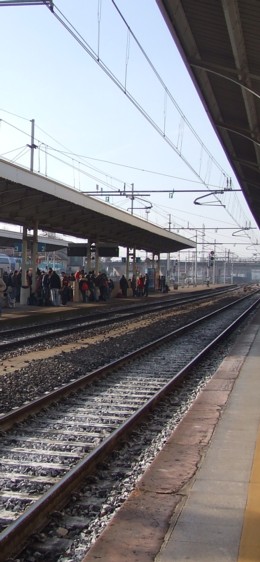
Most Italian towns have a good network of local transport services, which can include buses, metros, trains, trams, funiculars and lifts. Normally you buy a ticket in advance, at a ticket machine or at local news kiosks and tabacchi, which you validate when boarding a vehicle. Systems vary from town to town, but generally you can buy tickets valid across the whole range of local transport types. A single ticket is usually valid for a certain period of time, while day tickets can be good options for tourists.
Long-distance buses and coaches
Italy has a network of long-distance bus services, run by many different private companies. The vehicles are usually coaches, unlike the smaller, lower urban buses, and they are called pullman (pronounced with an Italian accent). Larger towns will usually have a bus station (autostazione), often close to the railway station, used by both long-distance and local bus services. Information on these services can be hard to come by, but throughout this website I’ve provided links to local bus companies which may be useful for visitors to specific destinations. As with local buses, you are generally expected to buy your tickets in advance; sales points are often listed on the bus company websites. These extra-urban bus services are especially useful in regions with poor railway coverage, such as Sicily and most mountainous areas.
Strikes
Public transport strikes are fairly frequent in Italy and can last just a few hours or a whole day. For some useful links and advice, see our article: Strikes in Italy.